

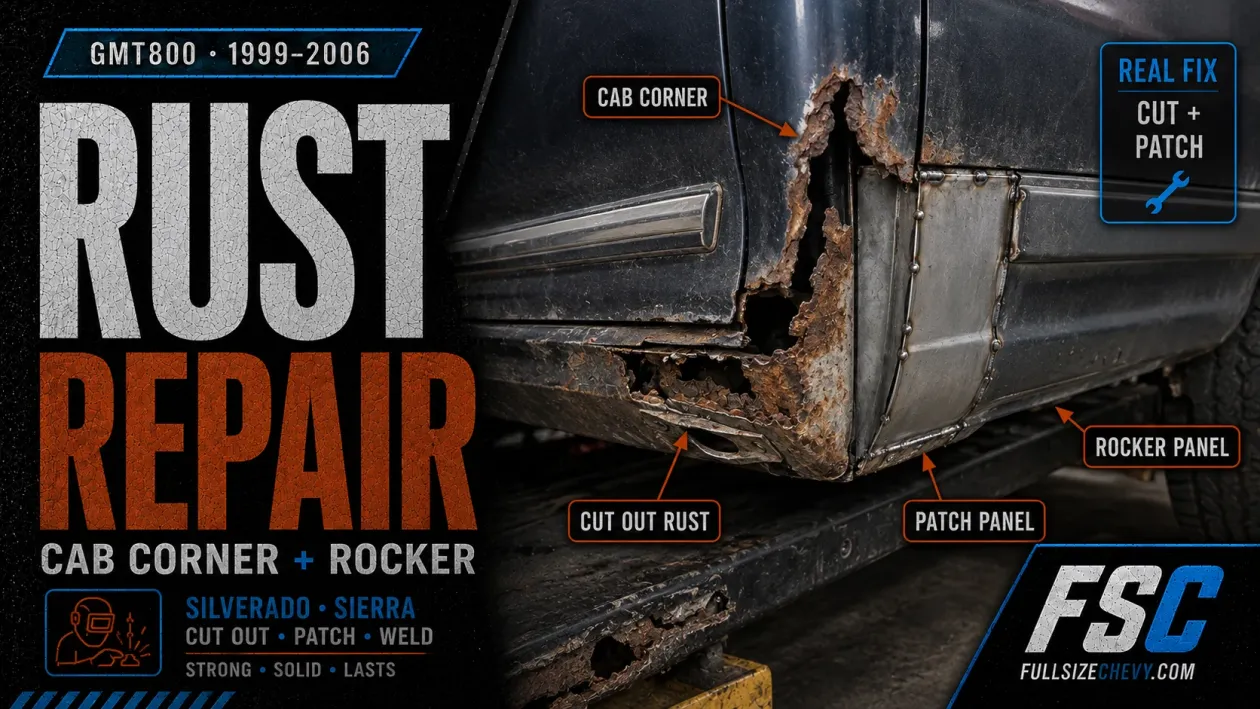
Rotted cab corners and rocker panels are the GMT800’s most common body problem, especially on trucks that lived where they salt the roads. The rust starts behind the rear doors and at the bottom of the cab, and it only spreads. Here’s the honest version of what it takes to fix it right — and why the cheap patch usually comes back.
Which trucks this covers
- 1999–2006 Silverado & Sierra (extended and crew cabs are prime cab-corner victims)
- Tahoe, Suburban, Yukon rockers and lower quarters follow the same pattern
Where it rusts and why

- Cab corners — the lower rear corners of the cab behind the doors, where dirt and moisture pack in.
- Rocker panels — the lower body between the wheel openings, often rusting from the inside out.
- Drain holes plug with debris, water sits, and the panels rot from behind — which is why surface rust is only the tip of it.
Assess the damage first
- Probe the metal. Push on suspect areas — soft, flaky metal or a screwdriver going through means it’s rotted well beyond the paint bubble.
- Check inside. The inner rocker and cab structure often rust worse than the outer skin you can see.
- Decide scope: a small isolated bubble is one thing; structural inner-rocker rot is a bigger, safety-relevant job.
Repair options, honestly
- Weld-in patch panels (the right way): cut out the rot, fit a proper cab-corner or rocker patch panel, weld it in, seal it, and treat the backside. This is what lasts.
- Bolt-on / clip-on covers: quick and cheap, but they cover rust rather than remove it — the rot continues underneath. Fine only as a temporary cosmetic move.
- Bondo over rust: don’t. Filler over active rust is the fix that fails in a season.
Do it so it lasts
- Cut back to clean, solid metal — rust left behind keeps growing.
- Treat and coat the backside of the repair (cavity wax or a rust-inhibitor coating) since that’s where it started.
- Reopen the factory drain holes so water can’t pool again.
- Prime, seal seams, and paint properly to keep moisture out.
Tools & materials

- Cab-corner and/or rocker patch panels for your cab configuration
- Welder (MIG), cutoff tool, grinder
- Weld-through primer, seam sealer, cavity wax/rust inhibitor, body filler for finishing only
Common mistakes to avoid
- Covering rust instead of removing it. It always comes back.
- Ignoring the inner structure and only patching the outer skin.
- Skipping backside treatment and drain holes — that’s why it rotted the first time.
FAQ
Are clip-on cab corners worth it? Only as a short-term cosmetic cover. They don’t stop the rust and can trap more moisture.
Is rocker rust a safety issue? The rockers are structural. Significant inner-rocker rot affects the cab’s strength — take it seriously.
Discuss it on the forum
Fighting tin worm on your GMT800? Post before/after photos of your cab corners in the FullSizeChevy GMT800 forum. Related: restoration guide and GMT800 common problems. See the GMT800 hub for the full platform overview — every model, engine and repair guide in one place.
Talk GMT800 with other owners
Post your truck, your build, or the problem you are chasing. Real GMT800 owners in the FSC forum will tell you what actually worked on theirs.
Open the GMT800 Forum →GMT800 Gear
Shop all GMT800 gear →
Find every repair, buying, maintenance, and troubleshooting guide in the GMT800 Owner’s Hub.
