

Published July 1, 2026 · Updated July 15, 2026 · How we source this
Classic Chevy & GMC Truck Restoration Guide (Squarebody, OBS, GMT800)
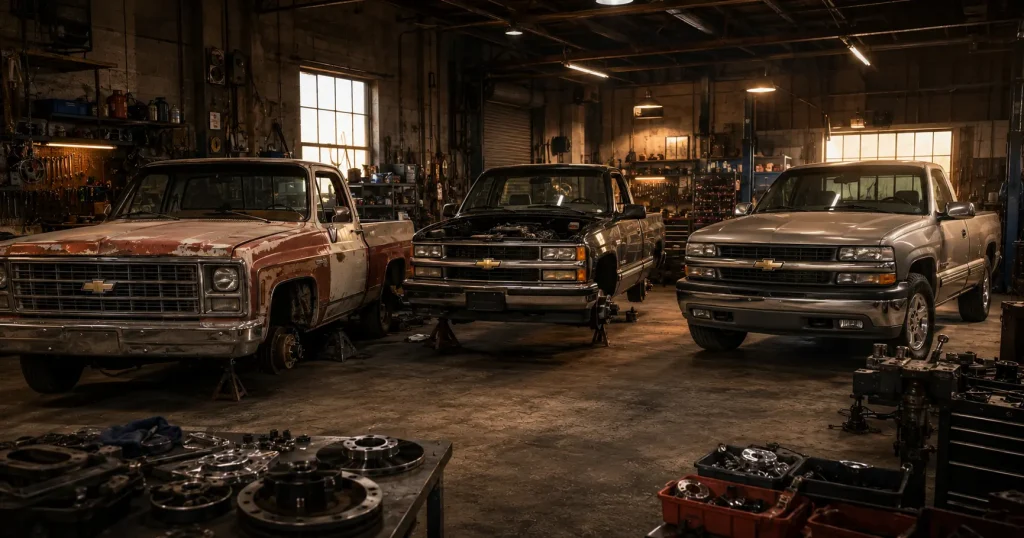
Restoring a full-size Chevy or GMC isn’t one job — it’s a stack of smaller jobs done in the right order. The guys who finish their trucks aren’t the ones who buy the most parts. They’re the ones who bought the right truck to start with, made a plan, and fixed the frame and the rust before they touched paint or wheels.
This guide covers the three platforms most people are actually restoring right now: the Squarebody (1973–1987), the OBS/GMT400 (1988–1998), and the GMT800 (1999–2006). It walks the decisions in the order you’ll hit them — what to buy, how to inspect it, what to fix first, and where people burn money they didn’t need to spend. If you already know your platform, jump to it. If you’re still shopping, start at the top.
Pick the Right Truck Before You Pick Parts
The single biggest cost lever on a restoration is the truck you start with. A solid, boring work truck with a clean frame beats a “rare” trim with a rotted cab every time.
What actually matters when you’re shopping:
- Frame and cab-mount condition. Surface rust is fine. Scale you can push a screwdriver through is not. Frame and cab-corner rot is the difference between a weekend project and a rotisserie build.
- Completeness. Missing trim, glass, and interior pieces add up fast and are the parts that sit on back-order. A complete-but-tired truck is worth more than a stripped “good deal.”
- Title and VIN match. Decode it and confirm it matches the truck. On Squarebodies especially, know what you’re buying — the Squarebody VIN decode guide breaks down year, series, engine, and plant.
- Drivetrain honesty. “Runs and drives” is a spectrum. A truck that idles in a driveway is not the same as one that holds oil pressure hot and shifts through all gears under load.
Squarebody prices have moved a lot — clean trucks and even good projects cost real money now, which changes the math on whether a rough one is worth saving. See why Squarebody values are rising before you overpay for a parts truck.
Rule of thumb: buy the best body and frame you can afford. You can rebuild a drivetrain in your driveway. You cannot un-rot a cab without a welder, time, and skill.
Inspect It Like You’re Going to Fix It
Whether you already own the truck or you’re standing in someone’s yard with cash in your pocket, inspect in this order. This is also your punch list once you own it.
1. Frame and structure
- Check the frame rails, especially behind the cab and over the rear axle, and the cab mounts and floor supports.
- Squarebody and OBS trucks rot at the cab corners, rockers, bed sides, and lower doors. GMT800 adds rusty rear wheel arches, cab corners, and rocker panels.
- Poke suspect areas. Bubbled paint hides scale.
2. Rust map
Rust drives your whole plan and budget. Map every spot before you cost anything out. On a Squarebody the common repair areas — cab corners, rockers, floor pans, lower doors, bed — are well documented in the Squarebody rust repair guide. The same inspection logic applies to OBS and GMT800; only the exact panels change.
3. Drivetrain reality check
- Cold-start it and watch oil pressure. On the small-blocks and later Vortec V8s, low pressure at hot idle is a known conversation — don’t panic, but verify it mechanically before you write off an engine.
- Drive it. Feel for a slipping or flaring 4L60E, driveline vibration, and steering slop.
- On Squarebody and OBS, steering-box and linkage wear is extremely common. If it wanders, that’s the Squarebody steering play family of fixes — not a reason to walk, but it is a bargaining chip.
4. Electrical sanity
- Old trucks collect hacked-in stereo wiring, corroded grounds, and previous-owner “fixes.” Wiggle-test the harness and check that the basics — lights, gauges, blower, wipers — all work.
- Budget time here. On OBS trucks specifically, a huge share of gremlins trace back to grounds and prior modifications — the OBS wiring guide is the starting point.
Make a Plan and a Budget (In That Order)
Write down what the truck is for before you spend a dollar. A clean daily driver, a weekend cruiser, a tow rig, and a show build are four different parts lists. Deciding up front stops you from buying twice.
A realistic plan answers four questions:
- What’s the end use? Daily, weekend, work, or show.
- Stock-ish or modified? Keeping it factory protects value on a desirable truck; modifying is fine on a common one.
- What’s the honest budget — and timeline? Then add a contingency. Rust and wiring always find more work than the first estimate.
- What are you doing vs. paying out? Bodywork, paint, and upholstery are the usual “pay a pro” line items.
Do not start with wheels, a lift, or a stereo. Those are the fun parts and they’ll still be there after the truck is solid.
Do the Work in the Right Order
Fixing things out of order is how people end up doing the same job twice. This is the sequence that saves money.
1. Structure and rust first
Cut out and repair rust, fix the frame and cab mounts, and get the body solid before any paint or cosmetics. Everything downstream bolts to this.
2. Brakes and safety
These trucks are old enough that the brake system usually needs attention regardless. On drum-brake Squarebodies, a front disc brake conversion is one of the highest-value upgrades you can do — it’s a safety and drivability improvement, not a show mod. OBS and GMT800 trucks came with front discs but still need the usual hoses, calipers, rotors, and fluid on a project.
3. Suspension and steering
Refresh the wear items — bushings, ball joints, tie rods, and the steering box or linkage. This is where a truck goes from “wanders all over the road” to “tracks straight and feels tight.” It’s also cheap insurance before an alignment and new tires.
4. Fuel and cooling
Old fuel systems are a fire and reliability risk. Plan on the tank, pump, lines, and filter as a system on anything that’s been sitting. Refresh the cooling system — radiator, hoses, thermostat, and water pump — while you’re in there.
5. Engine and drivetrain decisions
This is the big fork:
- Keep and refresh the factory engine if it’s healthy and originality matters. The Squarebody 350 and the OBS/GMT800 Vortec V8s are simple, reliable, and cheap to service.
- Rebuild if it’s tired but you want to stay period-correct.
- LS swap if you want modern power and reliability and the truck is a common one where originality isn’t the priority. The LS swap guide covers what actually bolts in and what needs work, and the best engine swap for Squarebody trucks breaks down the options on that platform. For GMT800 owners deciding between engines, the GMT800 Vortec engine breakdown explains the 4.8, 5.3, 6.0, and 8.1.
Whatever you choose, decide it before you’re deep into cosmetics — the engine choice affects mounts, cooling, wiring, and the transmission.
6. Interior and electrical
With the truck mechanically sound, sort the wiring properly (fix grounds, undo previous-owner hacks) and rebuild the interior — seats, dash, headliner, carpet. A tidy harness now prevents chasing gremlins later.
7. Paint and cosmetics last
Paint is the reward, not the first step. Do it after the body is solid and straight. If you’re keeping existing paint and just want it to look its best, a proper detailing and paint-correction process can bring back gloss without burning through thin old clear.
Platform Notes
The sequence above is universal. Here’s what’s specific to each platform.
| Platform | Years | Watch for | Best resource |
|---|---|---|---|
| Squarebody | 1973–1987 | Cab corners, rockers, floors, bed rust; drum brakes; steering slop | Squarebody restoration guide |
| OBS / GMT400 | 1988–1998 | Rocker/cab-corner rust, ground & wiring gremlins, tired suspension | GMT400 maintenance guide |
| GMT800 | 1999–2006 | Rear arch/rocker rust, 4L60E, hot-idle oil pressure on the V8s | GMT800 buyer’s guide |
Common Mistakes That Cost Real Money
- Buying a rotten truck because it was cheap or rare. Rust repair is the most expensive, most skilled work on the list.
- Starting with cosmetics. Wheels and paint on a truck that isn’t solid yet is money you’ll disturb later.
- Throwing parts at a problem instead of diagnosing it. Especially electrical — chase the ground before you buy the module.
- No plan for the drivetrain. Deciding to LS-swap halfway through paint means redoing cooling, mounts, and wiring.
- Skipping the frame and cab mounts. Everything bolts to structure. Fix it first or fix it twice.
- Underbudgeting rust and wiring. They always find more work. Build in a contingency.
Key Decision Points
- Restore or part it out? Frame and cab condition decides this, not sentiment.
- Stock or modified? Desirability and your end use. Common trucks are fair game to modify; clean, desirable ones hold value stock.
- Factory engine or LS swap? Originality and budget vs. modern power and reliability.
- DIY or pro? Bodywork, paint, and upholstery are the usual pay-out jobs.
FAQ
What’s the cheapest way to restore a classic Chevy truck?
Start with a solid body and frame, do the mechanical and safety work yourself in the right order, and pay out only for bodywork, paint, and upholstery if you can’t do them. The “cheap” truck with rot is almost never the cheapest to finish.
Should I LS swap or keep the original engine?
Keep it if it’s healthy and originality matters. Swap if you want modern power and reliability and the truck is a common one. See the LS swap guide.
What rusts first on these trucks?
Cab corners, rockers, floor pans, lower doors, and bed sides on Squarebody and OBS; rear wheel arches, rockers, and cab corners on GMT800. Map it all before you budget.
Do I need to convert my Squarebody to disc brakes?
If it still has front drums and you actually drive it, a front disc conversion is one of the best safety and drivability upgrades you can make. Details in the disc brake conversion guide.
In what order should I do the work?
Structure and rust, then brakes/safety, then suspension/steering, then fuel/cooling, then the engine/drivetrain decision, then interior/electrical, and paint last.
Talk Through Your Build With Other Owners
Every truck is different, and the guys who’ve already been through it will save you money. Share your platform, your rust map, and your plan on the FullSizeChevy forum and get real feedback before you cut, weld, or buy. Post your build thread, ask your platform-specific questions, and see how other owners sequenced their restorations.
Keeping your 5.3 or 6.0 alive?
If you sweat the details on your GMT800/GMT900, you'll like the gear. Built for Silverado, Sierra, Tahoe, Suburban, and Yukon owners who actually do the work.
Talk GMT800 with other owners
Post your truck, your build, or the problem you are chasing. Real GMT800 owners in the FSC forum will tell you what actually worked on theirs.
Open the GMT800 Forum →GMT800 Gear
Shop all GMT800 gear →
Find every repair, buying, maintenance, and troubleshooting guide in the GMT800 Owner’s Hub.