

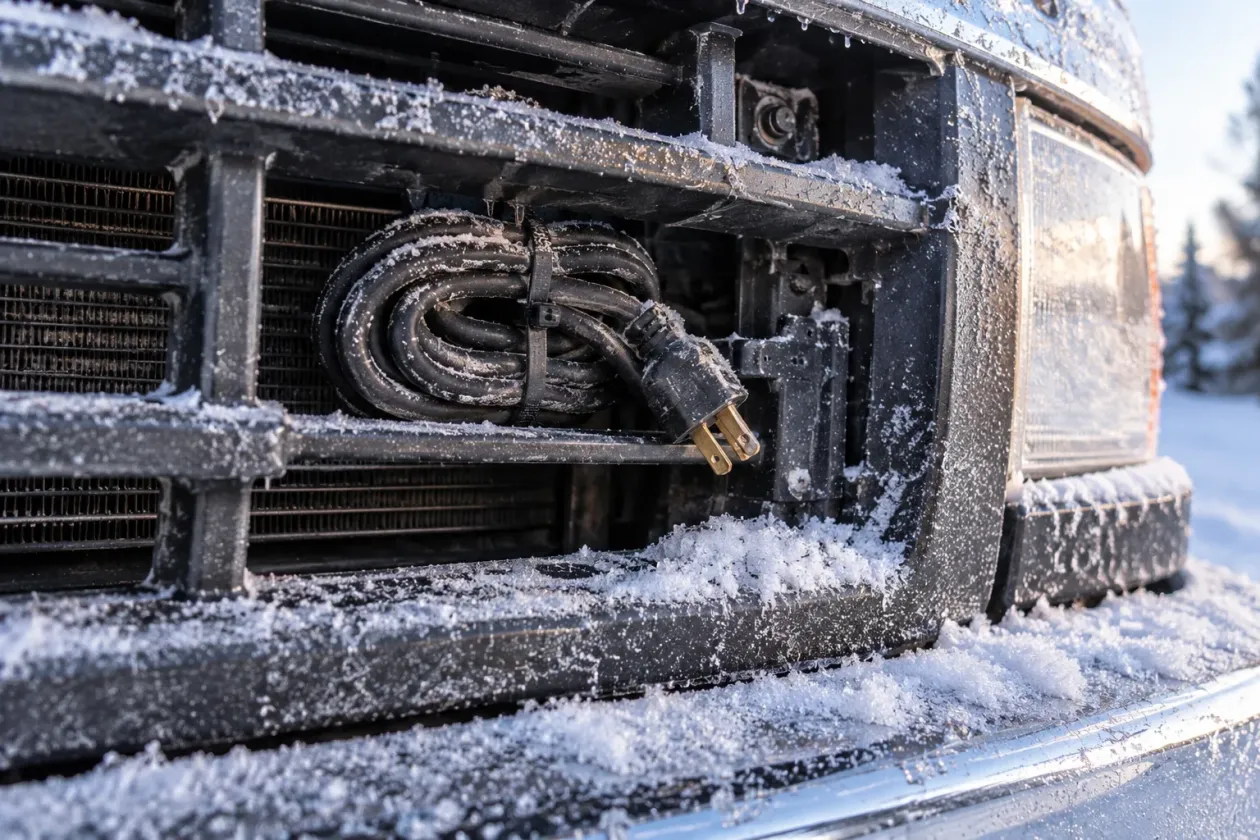
K05 is the RPO code for an engine block heater — a resistance element that threads into a freeze plug hole or the block and warms the coolant when the truck is plugged in overnight. It is one of the best-documented codes we hold, with thirty-five GM-sourced records running from 1990 to 2026.
The reason people look it up is almost always the same: they cannot find the cord.
Where K05 is documented
| Year | How GM described it | Source |
|---|---|---|
| 1990 | “Heater, engine block” | GM option master |
| 2007 | “Engine block heater” | 2007 Chevrolet Silverado Classic Truck Restoration Kit |
| 2016 | “Engine block heater” | 2016 Special Applications: Snowplow Prep Package |
| 2020–2023 | “Heater — engine block” | GM Upfitter police and special-service specification guides |
| 2025–2026 | “Engine block heater” | GM Fleet order guides; 2026 police specification guides; GM Canada eOGLD |
Nine distinct model years documented, with unbroken coverage from 2020 onward. The GMT400 and GMT900 years are gaps in our library rather than in GM’s catalog.
The element and the cord are two different things
This is the part that sends people in circles. On a great many GM trucks the block heater element is installed at the factory and the cord is a separate service part that was either never fitted or was cut off and lost years ago.
So a truck can genuinely have K05 on the label and no cord hanging behind the grille. It does not mean the label lies, and it does not mean the heater is broken.
How to find out what you have
- Decode K05 for your model year to confirm the truck was built with it.
- Look behind the grille and along the driver-side inner fender for a coiled cord with a three-prong plug, usually zip-tied out of the way.
- If there is no cord, look at the block itself. On small-block and LS-family V8s the element sits in a freeze plug location on the side of the block, usually driver side, with a short pigtail and a two-pin connector. If that connector is there, you have the element and you need the cord, not the heater.
- Test before you buy anything: with the engine cold and unplugged, measure resistance across the element. An open circuit means a dead element; a plausible low resistance means it is alive.
Is it worth using?
Below roughly 15 °F it earns its keep. Warm coolant means the engine reaches operating temperature sooner, which shortens the period of cold-start wear, gets you heat faster, and reduces the fuel a cold engine dumps in. Four to five hours on a timer does essentially all of the work — leaving it plugged in all night mostly heats your driveway.
It is not a substitute for the right oil. On the 8.1L in particular, oil choice changes cold-start behaviour more than the heater does — see the 8.1L startup chatter writeup.
What K05 does not tell you
- It is not a cold-weather package. There is no single code that means “built for winter”; the plow-prep package VYU is the closest thing and it is a different code entirely.
- It is not a battery heater or an oil-pan heater. Those are separate items where they exist at all.
- It does not guarantee the element still works. These fail open, quietly, and nobody notices until January.
Sources
- 2007 Chevrolet Silverado Classic Truck Restoration Kit, GM Heritage Archive
- 2016 Special Applications – Full Size K Series (4×4): Snowplow Prep Package, GM Upfitter
- 2020–2023 GM Upfitter police and special-service package specification guides
- 2025–2026 GM Fleet order guides and police package specification guides; GM Canada eOGLD
- GM VPPS option master, November 2002
Related
Talk trucks with other owners
Post your truck, your build, or the problem you are chasing and get real answers from full-size GM truck owners in the FSC forum.
Open the FSC Forum →