

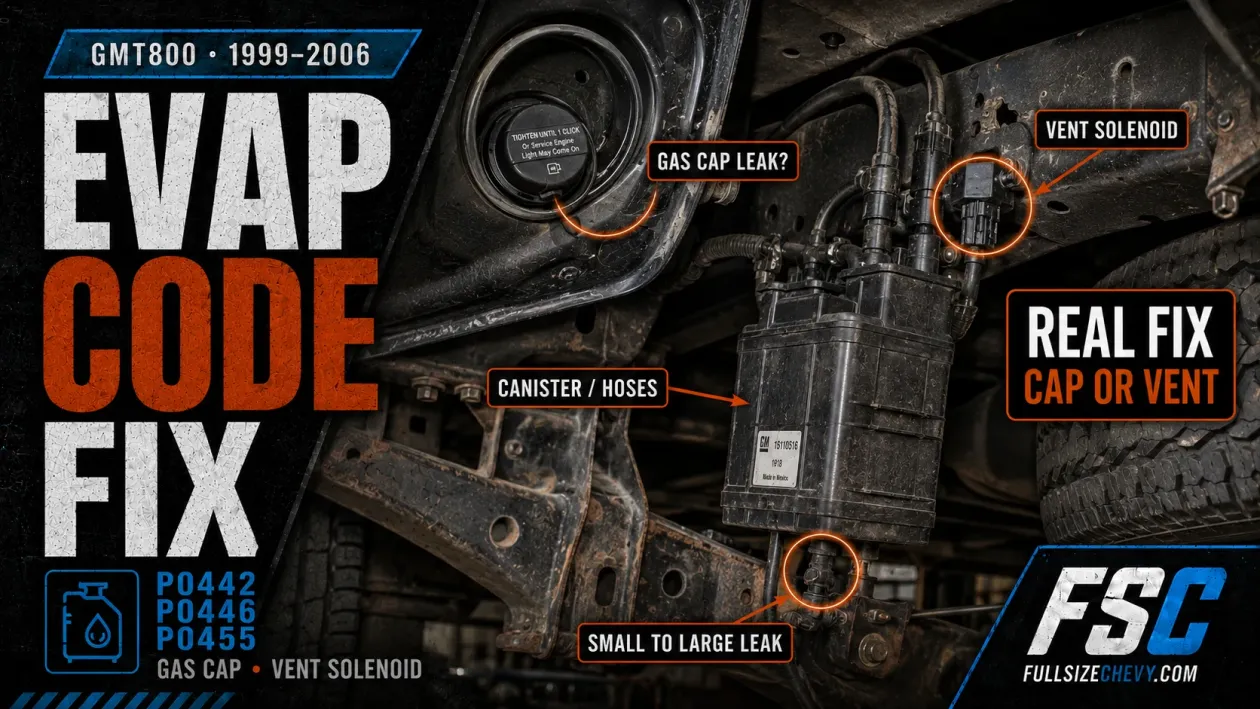
EVAP codes like P0442 (small leak), P0446 (vent system) and P0455 (large leak) on a 1999–2006 GMT800 are almost never an engine problem — they’re a sealed-fuel-vapor system with a leak or a stuck solenoid. The smart move is to start at the cheapest, most common cause and work outward instead of buying a charcoal canister on a guess.
Which trucks this covers
- 1999–2006 Silverado & Sierra, Tahoe, Suburban, Yukon, Avalanche, Escalade
- All engines — EVAP is a fuel-vapor emissions system, not engine-specific
What the codes mean
- P0442 — small EVAP leak
- P0446 — vent system performance (often the vent solenoid or a blocked vent)
- P0455 — large EVAP leak (think gas cap left loose or a disconnected hose)
Symptoms
- Check engine light with an EVAP code — usually no drivability change
- Occasional fuel smell (larger leaks)
- Failed emissions test
Most likely causes, ranked

- Gas cap — loose, worn seal, or aftermarket cap that doesn’t seal. Cheapest fix, check it first.
- EVAP vent solenoid (near the canister at the rear) — sticks or clogs, common on trucks that see dust and dirt roads.
- Purge solenoid (engine bay) stuck open or closed.
- Cracked or disconnected EVAP hoses, especially back by the tank and canister.
- Charcoal canister itself — least common, don’t buy it first.
Diagnosis in the right order
- Inspect and reseat the gas cap. Look at the rubber seal; try a known-good cap. Clear the code and drive.
- Check the vent solenoid and its filter/inlet for dirt or mud — a blocked vent commonly sets P0446.
- Inspect EVAP hoses front to back for cracks and loose connections.
- Smoke test the EVAP system to pinpoint a small leak (P0442/P0455) — by far the fastest way to find it.
- Test the purge and vent solenoids for correct operation before replacing the canister.
Tools
- Scan tool to read the specific code and reset monitors
- EVAP smoke machine (or a shop’s) for leak location
- Basic hand tools for hoses and solenoids
Parts guidance
Use a quality or OEM gas cap — cheap caps are a repeat offender. For vent and purge solenoids, ACDelco/GM Genuine is the safe choice on emissions hardware.
Common mistakes to avoid
- Buying a charcoal canister first. It’s the least likely and most expensive cause.
- Ignoring the gas cap because “it looks fine” — test with a known-good one.
- Overlooking a mud-blocked vent solenoid on a truck that sees dirt roads.
Verify the repair
Clear the code and complete a few drive cycles so the EVAP monitor can run and pass. A scan tool that shows monitor readiness saves you a return trip to the emissions station.
FAQ
Is it safe to drive with an EVAP code? Generally yes — it’s an emissions leak, not a mechanical failure — but you’ll fail emissions and should fix it.
My cap clicks but I still get P0455? The seal can still leak or a hose is off. Smoke test it.
Discuss it on the forum
Chasing an EVAP code on your GMT800? Post the exact code and what you’ve checked in the FullSizeChevy GMT800 forum. Related: GMT800 common problems. See the GMT800 hub for the full platform overview — every model, engine and repair guide in one place.
Talk GMT800 with other owners
Post your truck, your build, or the problem you are chasing. Real GMT800 owners in the FSC forum will tell you what actually worked on theirs.
Open the GMT800 Forum →GMT800 Gear
Shop all GMT800 gear →
Find every repair, buying, maintenance, and troubleshooting guide in the GMT800 Owner’s Hub.

