

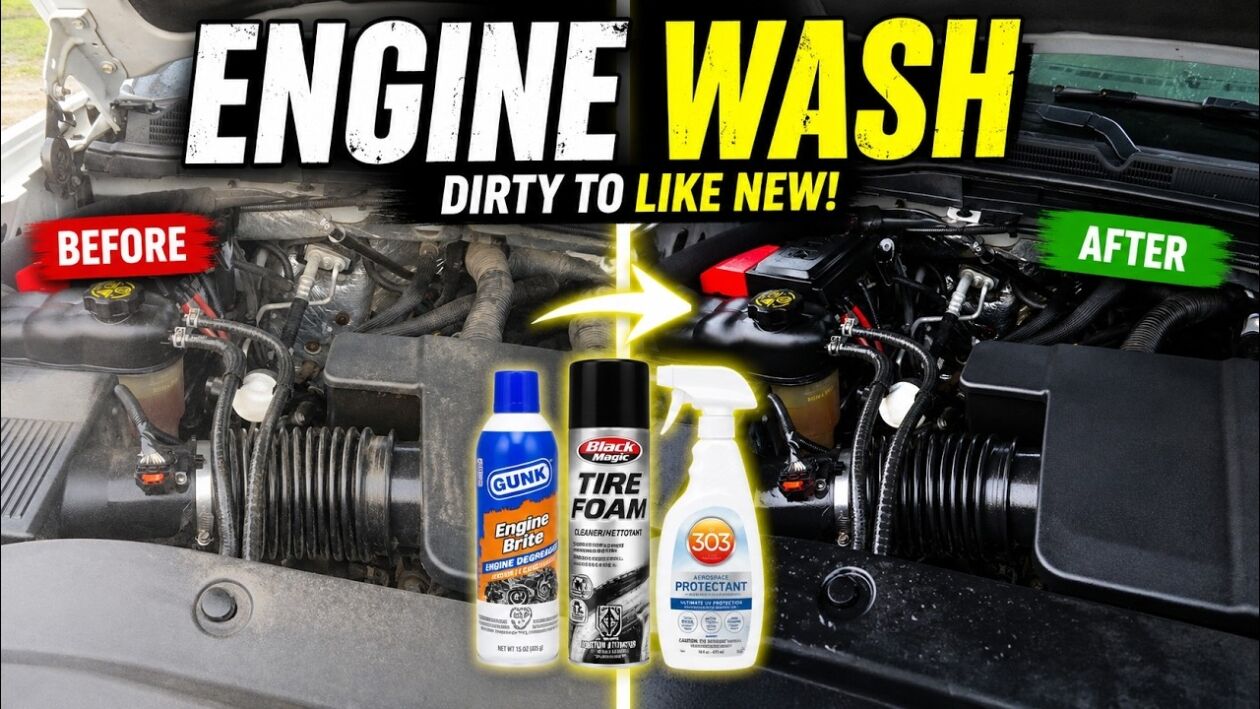
This is my daily driver — the same K2XX I put the oil catch can in and chased a faulted coil on the week before. The engine bay was not a disaster, but it had seen better days under there: road film on the cowl, grey plastics, dull harnesses, and a driver side head that got handled during the coil job. So I picked a night where I did not need the truck the next morning and gave it a proper engine wash.
The video is the whole job: degrease with GUNK Engine Brite, let it soak, rinse on the lowest pressure washer setting, run a heat cycle to dry it out, then dress the plastics with Black Magic tire foam. Below it are the steps, and the areas I deliberately kept degreaser and water away from — that is the part that will cost you if you get it wrong.
Products and equipment I used
Affiliate disclosure: As an Amazon Associate, FullSizeChevy may earn from qualifying purchases made through the links in this post, at no additional cost to you.
- GUNK Engine Brite — pressurized engine degreaser, and what I have had great luck with for years. The can says let it sit 10 to 15 minutes, then hose down with minimal water, and states not to spray it on electronic parts. One can covered this bay.
- Black Magic 36201 Tire Foam Cleaner, 510 g — what I finished the plastics, trim and harnesses with. Classic matte finish, not a bright shine, and in my experience it does not attract dust. It is sold as a tire and trim foam, so read the label and make your own call on where it belongs.
- 303 Products Aerospace Protectant Spray, 437 mL — UV protection and a matte finish for appropriate plastic, vinyl and rubber surfaces. My close second. It works pretty good, it just does not seem to last as long for me.
- An electric pressure washer on its lowest setting, or a garden hose.
- Rags — one lightly damp for the areas you are not spraying, dry ones for wiping drips at the end.
Prep and safety before you spray anything
The wash itself takes five minutes. The prep is what keeps you from creating an electrical problem.
- Do it at home, not at the car wash. I have been around the car wash industry my whole life and I would still avoid it. They have the best spot-free water, but if your rig does not start afterward you are stuck in a bay.
- Pick a night you do not need the truck. Mine is a daily, so it got done in the evening.
- Paint is the main concern with any degreaser. Keep it off your paint and always spray inward, toward the middle of the bay. If your paint itself is tired, that is a separate job — see restoring old Chevy paint.
- Stay off the electronics. The can says not to spray it on electronic parts. On my truck the fuse block and ECM connector got nothing — no degreaser, no pressure washer.
- Distributor trucks need more care. On a GMT400 or anything with a distributor that is not weather packed, seriously take it off or bag it off first. You do not want that problem.
- A little goes a long way. Light mist, not a flood.
How I cleaned the engine bay, step by step
- Start at the cowling. A quick squirt around the edges, spraying inward so nothing carries onto the paint.
- Fans and intake next. This truck runs electric fans, so I hit the fans, then the throttle body and intake.
- Back wall and upper cowl. Same light mist, still spraying inward.
- Intake manifold.
- Plastic head covers. A light coat on the K2XX plastic head cover, including the driver side that got dirty during the coil job, while avoiding the coils and any weather packs.
- Skip the fuse block and ECM connector entirely. I sprayed neither. Moisture in there can cause a no-start condition. Those got a lightly damp rag instead, and tire foam later to clean them up.
- Driver side head and brake booster. Light mist, avoiding as many connectors as I could.
- Battery top. I hit it and was not worried about it.
- Wait 10 to 15 minutes. That is what the instructions call for. The soak does the work, not the water.
- Rinse with minimal water. Lowest setting on the pressure washer, or a hose. I gave the firewall a quick spray at the back as well.
- Let it drip dry another 15 minutes.
- Fire it up and run a heat cycle. The can says run it about 15 minutes. After a couple of heat cycles the bay is dry and you are looking at your actual result, before any dressing.
Mine started like a glove. That is the payoff for keeping the fuse block and ECM dry.
Finishing the plastics, rubber and harnesses
If you are happy after the heat cycle, stop there. I went one step further, because faded black plastic is what makes a clean bay still look old.
I sprayed Black Magic tire foam on everything black: the wiper cowl and vinyl cowling, the intake harnesses, all the harnesses at the back, the battery cover, the intake, and the cowling over the radiator and the fan shroud. It dries matte rather than wet-looking, which is what I want under a hood, and on my truck it holds about a week or two.
You will get drips. Take a rag and wipe them in, and use the same rag to work product into spots the spray missed — that is also how I cleaned up around the fuse block without soaking it. If you would rather use 303 Aerospace Protectant, it is a good option for appropriate plastic, vinyl and rubber surfaces and adds UV protection. Check either label for the surfaces it is intended for.
Before and after
Before: road film everywhere, grey plastics, a visibly dirty driver side head, harnesses you would not look twice at. After the degrease and rinse the plastics came right back, and the firewall and cowl cleaned up well.
After the tire foam, the vinyl cowling is clean, the valve cover and throttle body plastics look good, and the harnesses, battery cover, intake, radiator cowling and fan shroud are all black again. Around the ECM ended up pretty clean too, purely from the damp rag and foam. I missed a couple of spots, and this is not a professional detail — I am not a professional detailer. For a five-minute wash and two products it is a good return. Paint is a different process entirely, covered in how to detail a Chevy truck and this summer detail process for GM trucks.
Mistakes to avoid
- Doing it at the car wash. Best water, worst place to be if it will not start.
- Spraying the fuse block or ECM connector. Wipe those, do not soak them. Water where it does not belong is also how you end up chasing electrical gremlins later.
- Letting degreaser hit paint. Spray inward, every time.
- Rinsing at full pressure. Lowest setting or a hose — minimal water is the instruction on the can.
- Rushing the soak. Rinse at five minutes and you are washing product off, not grime.
- Skipping the heat cycle. That run is what dries the bay out.
Common questions
Can you pressure wash a Chevy engine bay?
On the lowest setting, yes — that is what I used. The degreaser calls for minimal water, so treat the pressure washer as a rinse tool, not a cleaning tool. A garden hose does the job just as well.
How long should engine degreaser sit before rinsing?
GUNK Engine Brite says 10 to 15 minutes. I waited a touch past 15 and the difference was obvious.
What should you avoid when washing a truck engine?
On my K2XX I stayed off the fuse block, the ECM connector, the coils and coil wiring, and anything not weather packed. On an older truck with a distributor, remove it or bag it off before you start.
Why will my truck not start after an engine wash?
Moisture where it does not belong. That is why I keep water and degreaser out of the fuse block and off the ECM connector, and why I do this at home on a night I do not need the truck — so it has time to dry.
Is tire foam a good engine bay dressing?
It is what I use on mine, and it brings faded black plastic back with a matte finish instead of a wet shine. It is marketed as a tire and trim product, so read the label and decide for yourself where you use it.
How long does the finish last?
The Black Magic tire foam holds about a week or two on my truck. The 303 protectant does not seem to last as long for me.
Watch it, then tell me what you use
Watch the full engine wash above if you want to see how light the spray pattern actually is and how little water goes into the rinse — that part is hard to describe in writing.
Then tell me what you run. If you have a better product than these two for under the hood or on tires, I want to hear it. The goal is to keep building real Chevy tips for the next generation of owners, and that only works when the community adds to it.
Join the discussion thread on the FullSizeChevy forum — it is in the Detailing section, and I have asked the same question there: what do you run under the hood?
Talk K2XX with other owners
Post your truck, your build, or the problem you are chasing. Real K2XX owners in the FSC forum will tell you what actually worked on theirs.
Open the K2XX Forum →K2XX Gear
Shop all K2XX gear →
Find every repair, buying, maintenance, and troubleshooting guide in the K2XX Owner’s Hub.