
Published August 6, 2026 · Updated October 3, 2026 · How we source this
GMT400 Buyer’s Guide: Best Years, Engines, Common Problems and What to Check Before Buying

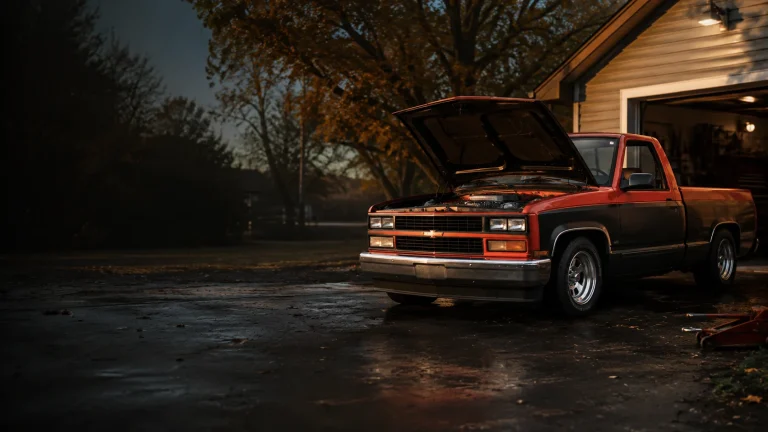
The GMT400 is the platform under every 1988–1998 full-size Chevrolet and GMC pickup, plus the 1992–1999 Suburban and 1992–2000 Tahoe/Yukon. Enthusiasts call them OBS — “Old Body Style” — a nickname that only exists because the GMT800 Silverado replaced them in 1999.
Short answer: the sweet spot is a 1996–1998 Vortec 5.7L (L31) K1500 or C1500 with a documented service history and a rust-free cab. You get sequential fuel injection, OBD-II diagnostics, the 1995-refresh interior, and roughly 250+ horsepower — without the electronic complexity of anything newer.
Biggest risk: rust. Not engines, not transmissions. Cab corners, rockers, bed supports, cab mounts, and rear frame rails are what turn a $6,000 truck into a $16,000 truck. A mechanically tired truck with a solid body is almost always the better buy than a sweet-running truck with lace for rocker panels.
Who should buy one: anyone who wants a genuinely repairable full-size truck with a huge parts supply, a massive aftermarket, real towing ability, and a body style that has been appreciating rather than depreciating for the last several years.
Start here if you’re new to the platform: the FullSizeChevy GMT400 hub.
A note on numbers in this guide: horsepower, torque, and RPO applications changed by model year, GVWR class, emissions package, and even assembly plant. Where figures moved around, we give ranges and tell you to verify against the truck’s own Service Parts Identification label rather than pretending one number covers eleven model years. Pricing is a directional U.S. market estimate — see the pricing section for the caveats.
GMT400 at a Glance
| Item | Detail |
|---|---|
| Core pickup years | 1988–1998 |
| Carryover years | 1999–2000 C/K “Classic” HD; SUVs to 1999/2000 |
| Chevrolet models | C/K 1500, 2500, 3500, Blazer, Tahoe, Suburban |
| GMC models | Sierra C/K 1500–3500, Yukon, Suburban |
| Common gas engines | 4.3L V6, 5.0L V8, 5.7L V8, 7.4L V8 |
| Diesel engines | 6.2L, 6.5L naturally aspirated, 6.5L turbo |
| Main automatics | 700R4/4L60, 4L60E, 4L80E, TH400 on early heavy-duty models |
| Main manuals | SM465, NV3500, NV4500 |
| Best all-around | 1996–1998 K1500 or C1500 with the 5.7L Vortec and 4L60E |
| Best heavy-duty | 1996–1998 K2500 or K3500 with the 7.4L Vortec and 4L80E |
| Biggest weakness | Body and frame rust |
| Buyer appeal | Simple, repairable, inexpensive parts and strong aftermarket support |
What Vehicles Are GMT400s?
GMT400 is GM’s internal platform code for the full-size C/K truck generation that launched for the 1988 model year and its SUV derivatives. It is not a trim, an engine, or a badge — you will never find “GMT400” written on the truck.
Pickups (1988–1998, HD to 2000):
- Chevrolet C/K 1500, 2500, 3500 — C = two-wheel drive, K = four-wheel drive
- GMC Sierra C/K 1500, 2500, 3500 — mechanically the same truck with different sheetmetal details, grille, and trim
- Regular cab and extended cab from launch; crew cab arrived for 1992 on the 3500
- Fleetside (standard) and Sportside (stepside) beds
- Chassis cab and commercial configurations, largely 3500
SUVs:
- Chevrolet Blazer (full-size) 1992–1994, renamed Tahoe for 1995
- GMC Yukon from 1992 (replacing the full-size Jimmy name)
- Four-door Tahoe and Yukon from 1995
- Chevrolet and GMC Suburban 1992–1999
- GMC Yukon Denali and the first Cadillac Escalade (1999–2000) are GMT400-based
Important exceptions people get wrong:
- 1988–1991 Suburbans, full-size Blazers/Jimmys, and crew cabs are NOT GMT400s. They are carryover Squarebody-era R/V trucks. A 1990 Suburban is a Squarebody chassis with a 1990 title. Do not shop for GMT400 parts for one.
- 1999 and 2000 C/K “Classic” 2500/3500 pickups are GMT400s. The 1999 Silverado GMT800 launched alongside them; GM kept building the old heavy-duty trucks until the GMT800 HD arrived for 2001. So “is a 1999 Chevy truck an OBS?” has two correct answers depending on which truck you’re standing in front of.
- Related sub-platform codes (GMT410, GMT415, GMT425, and similar) are cited inconsistently across sources for the SUV variants. Treat GMT400 as the family name and don’t let a seller talk you in circles over a four-digit code.
GMT400 Year-by-Year Changes
Knowing what changed and when is how you avoid buying the wrong truck for your goals.
| Period | What Defines It |
|---|---|
| 1988–1990 | Launch trucks. TBI engines, OBD-I, no airbag, 700R4/TH400 transmissions and no full-size SUVs yet. |
| 1991–1994 | The 4L80E arrives in 1991, full-size SUVs join in 1992, the crew cab returns in 1992, the 6.5L diesel replaces the 6.2L, the 4L60E arrives and the exterior receives a mid-period refresh. |
| 1995 | New dashboard and interior, driver airbag, revised HVAC system and updated steering column. |
| 1996–1998 | Vortec engines, OBD-II and the best factory power, refinement and driveability of the generation. |
| 1999–2000 | Heavy-duty C/K “Classic” carryover models only. |
1988–1990
The clean-sheet launch trucks. Independent front suspension on 4WD, aerodynamic cab, dramatically better ride and steering than the Squarebody. All gas engines are throttle body injection (TBI) — essentially a computer-controlled two-barrel. Diagnostics are OBD-I, read by jumping the ALDL connector and counting the flashes of the CHECK ENGINE light.
Rear-wheel anti-lock braking appeared very early in the run on light-duty trucks. Confirm on the specific truck rather than assuming by year.
1991–1994
The 4L80E heavy-duty automatic arrives (1991). The full-size Blazer/Yukon and Suburban move onto the platform for 1992, as does the crew cab pickup. The 6.2L diesel gives way to the 6.5L, with turbocharged versions following.
The 4L60E — the electronically controlled version of the 700R4 — phases in during this window. That matters more than it sounds: an electronic transmission is a better swap and tuning target later.
Federal center high-mounted stop lamp requirements bring the third brake light to pickups in this period, and the front-end appearance was freshened. These are the visual cues that separate an “early” truck from a “late” one at fifty feet.
1995 — the interior refresh
The single biggest mid-generation change. New dash, new door panels, new HVAC controls, revised steering column, and a driver’s-side airbag. If you plan to daily drive a GMT400, the 1995-up interior is meaningfully more pleasant and modern-feeling, and the seats and HVAC are easier to live with.
The engines are still TBI in 1995. This is the one year where you get the new interior with the old fuel system — a genuinely useful thing to know when comparing two listings.
1996–1998 — the Vortec years
Gas engines switch to the Vortec family with much better cylinder heads, higher compression, and sequential-style central port injection. Power jumps substantially across the board. OBD-II becomes standard, which means a $25 scan tool from any parts store reads the truck.
1998 is the last year for light-duty GMT400 pickups.
1999–2000 carryover
Heavy-duty 2500 and 3500 pickups continued as the C/K Classic. These are late-build GMT400s with the Vortec drivetrains and are worth seeking out if you want the newest possible example of the body style. Suburbans ran through 1999 and the four-door Tahoe/Yukon into 2000 before the GMT800 versions took over.
Best GMT400 Years to Buy
The best GMT400 years to buy are 1996–1998, because those trucks combine Vortec engines, OBD-II diagnostics, the refreshed interior, and the most refined version of the platform. But condition beats model year every time — a rust-free 1990 with records is a better purchase than a rotten 1998.
Here is how the periods actually rank by buyer type:
1996–1998 — best overall. Most power, best fuel injection, easiest to diagnose, most comfortable. The only real drawbacks are the Vortec central port injection system (see below) and slightly higher purchase prices because everyone else knows this too.
1995 — best compromise. New interior, TBI simplicity, lower price than a 96–98. If you value being able to fix things in a parking lot with hand tools over having 60 more horsepower, this is your year.
1993–1994 — best value. Electronic 4L60E in many applications, still cheap, still OBD-I. Solid platform for a build.
1988–1992 — best for simplicity and for builds. The cleanest canvas. Least electronics, lowest prices for equivalent condition, and the classic early front end that a lot of builders specifically want. You give up power, interior comfort, and diagnostic convenience.
1999–2000 C/K Classic HD — best for work. Newest metal, heaviest duty, 7.4L Vortec or 6.5L turbo diesel with the 4L80E. Rarely the cheapest, but often the least worn out.
Years and Configurations Requiring Extra Caution
None of these are “never buy.” They’re “know what you’re walking into.”
- Any Rust Belt truck without a documented underside. This outranks every mechanical concern in this guide.
- 1996–1998 with a rough idle or long crank. Suspect the central port injection spider assembly. Not a deal-breaker, but a real cost.
- 6.5L turbo diesel trucks, any year. The engine is fine when maintained and understood, but it is not a Cummins or a 7.3 Power Stroke and it is not a Duramax. Buyers who expect diesel-legend durability are consistently disappointed. Budget for a relocated fuel solenoid driver.
- Early 4L60E trucks used for towing or running big tires. The 4L60E is the most common failure point in the generation’s drivetrain.
- Half-ton trucks with plow mounts. A plow on a 1500 is abuse: front end, transmission, and frame all take it.
- Trucks with an aftermarket lift and cheap steering parts. See the modified-truck section.
- 1988–1991 Suburbans and crew cabs sold as GMT400s. They aren’t. Verify before you buy parts.
- Any truck where the seller can’t or won’t show you the SPID label.
GMT400 Engine Comparison
Figures below are approximate factory ratings across the generation. Output varied by model year, GVWR class, exhaust, and emissions calibration — verify against the specific truck’s build data.

| Engine | RPO | Fuel System | Years (Approx.) | HP (Approx.) | Torque (Approx.) |
|---|---|---|---|---|---|
| 4.3L V6 | LB4 | TBI | 1988–1995 | 155–165 hp | 230–235 lb-ft |
| 4.3L V6 Vortec | L35 | CPI / CSFI | 1992/96–2000 | 180–200 hp | 245–260 lb-ft |
| 5.0L V8 | L03 | TBI | 1988–1995 | 170–175 hp | 255–270 lb-ft |
| 5.0L V8 Vortec | L30 | CSFI | 1996–1998 | 220–230 hp | 285–295 lb-ft |
| 5.7L V8 | L05 | TBI | 1988–1995 | 190–210 hp | 290–310 lb-ft |
| 5.7L V8 Vortec | L31 | CSFI | 1996–2000 | 250–255 hp | 330–335 lb-ft |
| 7.4L V8 | TBI big block | TBI | 1988–1995 | Approx. 230 hp | Approx. 385 lb-ft |
| 7.4L V8 Vortec | L29 | CSFI | 1996–2000 | Approx. 290 hp | Approx. 410 lb-ft |
| 6.2L Diesel | — | Mechanical IDI | 1988–1993 | 130–160 hp | 240–275 lb-ft |
| 6.5L Diesel NA | — | Mechanical/electronic IDI | 1992–2000 | 155–180 hp | 275–300 lb-ft |
| 6.5L Turbo Diesel | L56 / L65 | Electronic IDI | 1992–2000 | 180–215 hp | 360– lb-ft |
Which engine for which buyer
| Engine | Best Use | Main Weakness | Buy It If |
|---|---|---|---|
| 4.3L TBI | Light 2WD work and commuting | Underpowered when loaded and not much cheaper to own | You want the cheapest running truck |
| 4.3L Vortec | Light-duty use with more usable power | Spider injection and CPI issues | You genuinely do not tow |
| 5.0L TBI | Daily driving | No meaningful ownership-cost advantage over a 5.7L | The price is right and the truck is rust-free |
| 5.0L Vortec | Daily driving | Slightly less torque than the 5.7L for similar running costs | A clean example appears at a low price |
| 5.7L TBI | All-around use and simple builds | Modest power and high fuel consumption | You value simplicity and inexpensive parts |
| 5.7L Vortec | All-around use and towing under 7,000 lb | CSFI spider injection and intake-gasket failures | You want the best overall GMT400 engine |
| 7.4L TBI | Heavy towing and 454 SS applications | Fuel economy is genuinely poor | You need torque and do not care about fuel cost |
| 7.4L Vortec | Heavy towing and HD trucks | High fuel cost and more expensive replacement parts | You tow heavy loads regularly |
| 6.2L Diesel | Economy hauling and low-stress use | Slow and not designed as a performance engine | You want a simple diesel and have modest expectations |
| 6.5L Turbo Diesel | Heavy-duty towing | PMD/FSD failures and heat-management issues | You will research the platform and complete the required upgrades |
Fuel economy across the generation, realistically: 4.3L and 5.0L trucks land in the mid-teens; a 5.7 with 3.42 gears runs low-to-mid teens; a 7.4 is single digits to low teens; 6.5 diesels can see high teens to low twenties in a light 2WD. Big tires, 4WD, and taller gears move all of those down.
TBI vs Vortec: Which Should You Buy?
Buy the Vortec if you want power and modern driveability; buy TBI if you want simplicity and the lowest cost of ownership. Both are reliable when maintained. They fail differently.
TBI (1988–1995) puts two injectors in a throttle body on top of the intake. It’s crude, it’s low pressure, and it will run on nearly anything. Fewer parts to fail, cheaper parts when they do, and the whole system can be understood by anyone who once owned a carburetor. Downsides: less power, worse fuel distribution, and OBD-I diagnostics that require a paperclip and patience.
Vortec (1996–1998) uses better heads, higher compression, and central port injection — a “spider” assembly under the intake feeding poppet nozzles or, later, individual injectors. The result is 40–60 more horsepower and a much more modern-feeling truck.
The catch: the CSFI spider is the known weak point. Failing poppet nozzles cause hard starting, extended crank, rough idle, misfire codes, a raw fuel smell, and sometimes a fuel-soaked plug or two. It’s not a scary repair conceptually — the intake comes off, the assembly gets replaced — but it is a real several-hundred-dollar-plus job. The common upgrade is a multi-port conversion kit that replaces the poppets with proper injectors, which is generally considered the permanent fix.
Vortec 5.7 trucks also have a reputation for intake manifold gasket seepage and for distributor cap/rotor wear causing intermittent misfires. Neither is exotic; both are worth checking on a test drive.
Verdict: for a daily driver or tow rig, the Vortec is worth the premium. For a project, a farm truck, or a swap candidate, the TBI truck’s lower purchase price is money better spent on the body.
GMT400 Transmission and Drivetrain Guide
| Transmission | Type | Typical Pairing | Strength | Watch For |
|---|---|---|---|---|
| 700R4 / 4L60 | 4-speed automatic, hydraulic | Early 1500 and light-duty 2500 models | Simple and inexpensive to rebuild | TV cable adjustment and 3-4 clutch failure |
| 4L60E | 4-speed automatic, electronic | 1500 and light-duty 2500 models | Strong tuning and swap support | 3-4 clutch burn and sun-shell failure |
| 4L80E | 4-speed automatic, electronic | 2500HD, 3500, 7.4L and diesel models | Genuinely heavy-duty | Expensive rebuilds, TCC faults and pressure-switch issues |
| TH400 / 3L80 | 3-speed automatic | Early heavy-duty models | Extremely durable | No overdrive and poor highway fuel economy |
| NV3500 | 5-speed manual | 1500 and some 2500 models | Light and pleasant to drive | Synchro wear and limited strength for heavy towing |
| NV4500 | 5-speed manual | 2500, 3500 and diesel models | Very strong and highly desirable | Fifth-gear nut failure and incorrect fluid |
| SM465 | 4-speed manual | Early heavy-duty models | Bulletproof with a very low first gear | Non-synchronized first gear and no overdrive |
How to tell a healthy automatic in five minutes: fluid should be red-to-brown and smell like fluid, not like burnt toast. Shifts should be firm but not violent, with 1-2 and 2-3 arriving without flare (engine revving between gears). Lock-up should occur around 45–50 mph and you should feel a small “gear-like” drop in RPM. Slipping in reverse, a long delay engaging drive when cold, or a “neutral” moment during the 2-3 shift on a 4L60E all point to a rebuild.
Rebuild cost reality: a 4L60E rebuild typically runs meaningfully less than a 4L80E, and both are far more expensive installed at a shop than as a DIY swap with a remanufactured unit. Ranges vary hugely by region — get a local quote before you negotiate, not after.
What kills these transmissions: oversized tires without a gear change, towing over capacity, plowing, no cooler, and never changing the fluid. A truck with 33s and factory 3.42 gears has effectively been towing a trailer its entire life.
Transfer cases
Common 4WD setups use New Process/New Venture cases — manual-shift and electric-shift versions were both used. The electric-shift systems add an encoder motor and a control module that can fail, giving you a truck that won’t leave 2WD or won’t come out of 4WD. Manual-shift cases are simpler and preferred by most builders.
Separately, GMT400 4WD trucks use a front axle disconnect system. A failed actuator means the transfer case shifts, the light comes on, and the front wheels still don’t pull. Always test 4WD in an empty lot, both High and Low, forward and reverse.
Axles and gears
| Class | Typical Rear Axle |
|---|---|
| 1500 | 8.5-inch 10-bolt |
| 2500 Light-Duty | 9.5-inch 14-bolt semi-float |
| 2500HD / 3500 | 10.5-inch 14-bolt full-float |
Common ratio RPOs you’ll see on the SPID label: GU4 (3.08), GU5 (3.23), GU6 (3.42), GT4 (3.73), GT5 (4.10). G80 is the Eaton locking differential — a genuine value-add, especially on a 4WD.
For a 5.7 half-ton, 3.42 is the do-everything ratio, 3.73 is better with tires or a trailer, and 3.08 is a highway-economy gear that feels lazy loaded.
Rear-end noise: a howl that changes with throttle load usually means gears; a rumble or growl that tracks with road speed regardless of throttle usually means bearings. Pull the diff cover if you’re serious — the fluid tells you the truth. Glitter is bad news.
Half-Ton vs 2500 vs 3500
| Category | 1500 | 2500 Light-Duty | 2500HD / 3500 |
|---|---|---|---|
| Ride | Best | Firm | Stiff with noticeable empty-truck bounce |
| Payload | Modest | Middle | Highest |
| Rear Axle | 8.5-inch 10-bolt | 9.5-inch 14-bolt | 10.5-inch full-float |
| Front Brakes | Lighter-duty | Mid-duty | Heaviest-duty |
| Transmission | 4L60 / 4L60E | 4L60E or 4L80E | 4L80E or manual |
| Best For | Daily driving and light towing | Occasional heavy work or towing | Real work and large trailers |
The trap here is the light-duty 2500. It looks like a heavy-duty truck, is registered like one, and carries an intimidating GVWR badge — but it may have half-ton-derived brakes and a 4L60E behind it. If you’re buying for towing, verify the axle and transmission, not the badge. The SPID label settles it.
Diesel trucks and many HD trucks use hydroboost braking (power assist from the power steering pump) rather than a vacuum booster. It works well but adds power steering system dependency: a leaking hydroboost unit or a failing pump means a hard brake pedal, not just a whiny steering box.
Common GMT400 Problems
Sorted by how much they should affect your offer.
Deal-breakers or major negotiating leverage
| Problem | Symptoms | How to Check | Severity |
|---|---|---|---|
| Frame Rust | Flaking, heavy scaling or holes near the rear spring hangers | Tap suspicious areas with a screwdriver handle and probe loose scale | Walk away if the frame is perforated |
| Cab Mount Rot | Shifted cab, uneven door gaps or creaking while driving | Inspect the cab mounts behind the doors from underneath | Major structural repair |
| Rotted Cab Corners / Rockers | Bubbling paint, body filler or fresh undercoating | Use a magnet and inspect or probe the panels from inside the cab | Costly bodywork |
| Rusted Brake / Fuel Lines | Heavy scaling on the metal lines running along the frame | Inspect closely and run a gloved hand along the frame rails | Must be repaired before driving |
| Slipping Transmission | Engine flare between shifts, delayed engagement or no reverse | Test drive the truck when cold and again at full operating temperature | Potentially expensive rebuild |
| Overheating / Head Gasket | Steam, sweet coolant smell or bubbles in the cooling system | Start it cold, monitor temperature and inspect beneath the oil cap | Walk away if found on a diesel |
| 6.5L PMD / FSD Failure | Random stalling followed by a no-start condition until the engine cools | Ask whether the PMD has been relocated away from engine heat | Budget for replacement or relocation |
Common, expected, and negotiable
| Problem | Symptoms | Difficulty |
|---|---|---|
| Fuel Pump Failure | No-start condition, loud fuel-pump whine or difficult hot restarts | Moderate — tank drop |
| Vortec CSFI Spider | Long cranking, rough idle or raw-fuel smell | Moderate |
| Intake Manifold Gasket Leak | Coolant loss or visible seepage near the intake-manifold corners | Moderate |
| TBI Injector Dribble | Rich cold starts, black exhaust smoke or visible injector dripping | Easy |
| Distributor Cap / Rotor Wear | Intermittent misfire, hesitation or stumbling under load | Easy |
| Ignition Control Module | Random stalling or failure to restart when hot | Easy |
| Idler Arm / Pitman Arm Wear | Steering wander, looseness or clunking from the front end | Easy–moderate |
| Ball Joints / Tie Rods | Front-end clunks, loose steering or uneven tire wear | Moderate |
| Front Wheel Bearing / Hub | Growling or humming noise that changes while turning | Easy–moderate |
| Front Axle Actuator | Four-wheel-drive indicator illuminates but the front axle does not engage | Easy |
| Wiper Pulse Board | Wipers fail to park, stop randomly or operate at only one speed | Easy |
| Blower Resistor | HVAC blower operates only on the highest speed | Easy |
| Heater Core Leak | Wet passenger carpet, sweet coolant smell or fogged windshield | Hard — dash work |
| A/C Compressor / Conversion | No cold air or compressor does not engage correctly | Moderate |
| Door Hinge Pins and Bushings | Door drops when opened, binds or becomes difficult to latch | Easy — classic GMT400 issue |
| Cracked Dash Pad | Splits or cracks around the defroster vents and upper dash | Cosmetic |
| Sagging Headliner | Loose or hanging headliner fabric | Easy |
| Window Regulator / Motor | Slow, crooked or completely inoperative power window | Moderate |
| Fuel Gauge Sender | Fuel gauge reads incorrectly, fluctuates or stays pinned | Moderate — tank drop |
| Power Steering Leak | Pump whine, wet steering gearbox or persistent fluid loss | Easy–moderate |
| Rear Main Seal / Oil Pan Seepage | Oil drips or an oily transmission bellhousing area | Varies |
Noises: harmless or serious?
- Cold-start exhaust tick that goes away in 60 seconds — usually an exhaust manifold bolt or gasket leak. Annoying, common on Vortec engines, not urgent.
- Tick that stays hot and rises with RPM — could be a lifter or a valvetrain issue. Investigate.
- Light diesel-like clatter from a gas 5.7 under load — check for detonation, timing, and fuel quality before panicking.
- Whine from the fuel tank at key-on that continues — fuel pump on its way out.
- Clunk over bumps — usually a sway bar link, idler arm, or worn u-joint. Cheap. Find it.
- Clunk on shifting between drive and reverse — u-joints or slop in the driveline. Check them by hand.
- Growl that changes pitch when you swerve — wheel bearing.
- Howl at a specific speed under load only — rear gears.
GMT400 Rust Guide
GMT400s rust in a predictable order: cab corners, rockers, rear wheel arches, bed supports and bed floor, cab mounts, then frame. If the first three are gone, assume the rest are compromised until proven otherwise.
Check these exact spots:
- Cab corners — the vertical panel behind each door, low. Look from outside and from inside the cab behind the seat. Bubbling paint here means the metal behind is already gone.
- Rocker panels — under the doors. Press firmly. Softness or crunch is rot.
- Lower door skins — the bottom two inches, especially the inside seam.
- Rear wheel arches and bedside lips — the outer lip and the inner wheelhouse.
- Bed floor and bed supports — the crossmembers under the bed. Lift the bed mat. A truck with a nice bed floor and rotten supports is a common trap.
- Cab mounts — six body mounts. The pair behind the doors rot most. Get under and look at the mount pockets, not just the bolts.
- Rear frame section — around and behind the rear spring hangers. This is the structural one.
- Front cab floor — pull the carpet at the driver’s footwell. Leaking windshield and cowl seals kill these.
- Rear cab floor / behind the seat — the rear window gasket leaks, water sits under the seat.
- Core support and inner fenders — battery-tray corrosion, headlight mounting area.
- Brake and fuel lines — the runs along the frame rail. Rusty hard lines are a safety item.
- Fuel tank straps and filler neck.
- On Suburbans/Tahoes: rear quarters near the tailgate/barn door hinges, hatch bottom, rear cargo floor, and the area under the third-row/rear seat.
Signs of a hidden rust repair: fresh thick undercoating in one area only, seam sealer applied over paint, a magnet that won’t stick low on a panel, mismatched panel texture, overspray on suspension, screws or brad heads under paint, and body filler you can find by tapping (dull thud instead of a tinny ring).
A rusty cheap truck is not cheap. Quality cab corner and rocker replacement — cut, weld, blend, paint — routinely costs more than the difference between a rust-belt truck and a southwestern one, and that’s before the bed and cab mounts. Buy the dry truck and drive further to get it.
Problems by Mileage and Condition
| Mileage | What Is Typically Due |
|---|---|
| Under 100,000 | Genuine low-mileage examples are rare. Verify the mileage with service records because the five-digit odometer can roll over. |
| 100,000–150,000 | Fuel pump, water pump, idler arm, alternator and distributor cap. |
| 150,000–200,000 | Transmission service or rebuild, intake-manifold gaskets, CSFI spider assembly, ball joints and wheel hubs. |
| 200,000+ | Everything listed above, plus rear-main-seal leakage, steering-box wear, injector work and tired suspension components. |
| Any Mileage | Rust, HVAC problems, window motors, door-hinge pins and dashboard cracks. These are age-driven problems rather than mileage-driven problems. |
A GMT400 with 220,000 miles and a folder of receipts is a safer purchase than an 89,000-mile truck that sat outside for a decade. Sitting is harder on these than driving.
Best GMT400 Configuration by Use
| Use Case | Recommendation | Why |
|---|---|---|
| Best Overall | 1996–1998 K1500 with the 5.7L Vortec, 4L60E, 3.42 gears and G80 locking differential | Strong power, OBD-II diagnostics, improved comfort and solid resale value |
| Best Daily Driver | 1995–1998 extended-cab 1500 with the 5.7L | Updated interior, usable cabin space and reasonable fuel economy |
| Best Budget Truck | 1988–1994 C1500 with the 4.3L or 5.7L TBI | Lowest entry cost and simple, inexpensive repairs |
| Best Engine | 5.7L Vortec L31 | Best balance of power, availability and manageable problems |
| Best for Simplicity | 1988–1993 truck with the 5.7L TBI | Fewer electronics and inexpensive replacement parts |
| Best Modern Driveability | 1998 Vortec truck | Final core pickup year and the most developed version of the platform |
| Best Towing — Gas | 1996–2000 2500HD or 3500 with the 7.4L Vortec and 4L80E | Big-block torque paired with the correct heavy-duty transmission |
| Best HD Gas Truck | 1999–2000 C/K Classic 3500 | Newest and most heavy-duty version of the platform |
| Best Diesel | 1996–2000 6.5L turbo diesel with a properly relocated FSD/PMD | Most developed version of the engine with its major heat-related weakness addressed |
| Best Manual | 2500 or 3500 with the NV4500 | Strongest and most desirable manual transmission offered |
| Best LS-Swap Base | 1988–1998 regular-cab short-bed truck with any original engine | Light weight, lower purchase cost and extensive swap support |
| Best Restoration | Dry-climate 1988–1991 regular-cab short-bed truck | Clean starting point and strong finished value |
| Best Lowered Street Build | C1500 regular-cab short-bed with the 5.7L | Two-wheel drive, short wheelbase and extensive aftermarket support |
| Best Off-Road Build | K1500 or K2500 regular cab with a solid frame | Factory four-wheel drive and a large suspension and drivetrain aftermarket |
| Best SUV | 1996–1999 four-door Tahoe or Yukon 4WD with the 5.7L Vortec | Best drivetrain combination and the most practical body configuration |
| Most Collectible | 454 SS, low-mileage regular-cab short-bed 4x4s, original Sport or Z71 trucks and the 1999 Yukon Denali | Scarcity, originality and sustained enthusiast demand |
| Most Caution Required | Plow trucks, rust-belt survivors, cheaply lifted builds and high-mileage 6.5L diesels | High risk of hidden structural, drivetrain and repair costs |
The 454 SS (produced roughly 1990–1993, regular cab short bed, 7.4L, black at launch with Summit White and Victory Red added later) is the clearest collectible in the generation. Verify one carefully — clones exist, and the SPID label is your friend.
Buying a Modified GMT400
Most GMT400s for sale have been touched. Modifications aren’t automatically bad — but they change what you’re buying.
Modifications that usually add value:
- Quality suspension components from known brands, installed with correct hardware
- Gear ratio changes that actually match the tire size
- Rear disc brake conversions done with a complete engineered kit
- Hydroboost conversions on trucks that need the stopping power
- Documented, professional LS swaps with proper wiring, fuel system, and tuning
- Transmission upgrades (4L80E behind a big block, for example) with correct crossmember and controller
- Trailer brake controllers and correct hitch hardware
Modifications that hide problems or cost you money:
- Big lifts on a cheap budget. Look for drop pitman arms, correct brake line length, and whether steering geometry was addressed. Bump steer and a wandering front end are the tells.
- Wrong wheel offset. Deep-dish wheels push load onto bearings and ball joints. Uneven inner tire wear and a growly front end follow.
- Frame notches and C-notches without proper boxing or clean welds. Look at the weld quality, not the stance.
- Air suspension installed without a serviceable, labeled system. Ask to cycle it fully, listen to the compressor, and look for leaks at the bags.
- Body lifts that leave gaps, stretched wiring, or an unsupported bumper.
- Carburetor conversions on a TBI truck — often done to sidestep a diagnostic problem rather than solve it.
- Aftermarket wiring, alarms, and remote starts. Scotch-locks, taped splices, and a rat’s nest under the dash are a genuine reason to walk. GMT400 electrical gremlins usually trace back to someone else’s audio install.
- Tuned ECMs with no documentation. If the seller can’t tell you who tuned it and why, budget for a return to a known calibration.
- Plow equipment. Even removed, a plow leaves evidence: frame brackets, cut valance, added wiring, and a front end that’s been loaded hard for years.
- Fresh paint on a 30-year-old truck. Sometimes it’s pride. Sometimes it’s twelve pounds of filler. Check panel gaps, magnet the low panels, and look at the door jambs and under the hood for overspray and color mismatch.
- Cab or bed swaps. Different fade, different jamb color, different VIN sticker condition. A truck assembled from donors can be perfectly serviceable and is worth notably less.
Rule of thumb: a well-documented modified truck with receipts is fine. An undocumented modified truck is a project someone else already started badly.
20–30 Minute GMT400 Inspection Checklist
Run this in order. Bring: a small flashlight, a refrigerator magnet, a rag, an OBD-II scanner (for 1996+), a pair of gloves, and a paper towel.
1. Paperwork and VIN
- Title in seller’s name, matching the VIN on the dash and door jamb
- Check the door jamb sticker and SPID label (usually inside the glovebox door)
- Confirm the truck is what it’s advertised as: 1500 vs 2500 vs 3500, 4WD vs 2WD
- Ask directly: rust repair, accidents, plowing, towing, who did the work
2. Exterior walkaround
- Stand at each corner and sight down the body lines
- Panel gaps at the doors, hood, and tailgate — uneven gaps suggest cab mount or collision issues
- Check for color mismatch in daylight, especially bed vs cab
- Glass: date codes should roughly match; a replaced windshield is fine, a replaced everything is a story
3. Rust inspection
Work the list from the rust guide: cab corners, rockers, lower doors, wheel arches, bed supports, cab mounts. Magnet the lower panels. Probe anything soft.
4. Frame and underbody
- Get down at both rear wheels and look at the frame near the spring hangers
- Look at the top of the frame rails under the bed if you can
- Run a gloved hand along the brake and fuel lines
- Check for fresh undercoating hiding a repair
- Look for wet spots: transfer case, transmission pan, differential, oil pan, power steering
5. Engine off
- Oil on the dipstick: level, color, no milkiness
- Coolant in the radiator (not just the overflow) — brown or oily is a walk-away
- Transmission fluid: color and smell
- Squeeze the upper radiator hose — mushy or rock-hard means old
- Belt and pulleys, battery tray corrosion
- Look under the oil fill cap for mayonnaise
- Grab the top of each front tire at 12 and 6 and rock it — play means ball joints or bearings
- Grab at 3 and 9 — play means tie rods or idler arm
6. Cold start
Insist on a genuinely cold start. A seller who warms the truck up before you arrive is hiding something more often than not.
- Listen for lifter noise, exhaust manifold tick, starter drag
- Watch the exhaust: blue = oil, white that doesn’t clear = coolant, black = rich fuel
- Note how long it cranks. Extended crank on a 96–98 Vortec points at the CSFI spider
- On a diesel: glow plug wait, then start; heavy white smoke that lingers is a concern
7. Engine running
- Oil pressure gauge should read healthy at idle and rise with RPM
- Temperature should stabilize and stay there
- Voltage in the 13–14.5 range
- Listen for vacuum leaks, exhaust leaks, and belt noise
- Look for coolant seepage at the intake manifold corners on a Vortec
8. Transmission
- Shift through all gears at a stop; each should engage within a second
- Watch for a “clunk” into reverse (driveline slop) versus a delay (transmission)
- On the road, note 1-2, 2-3, 3-OD shift quality and torque converter lockup around 45–50 mph
9. 4WD (if equipped)
- Empty lot, low speed: shift into 4HI, drive forward and back, turn
- Confirm the front axle actually engages — the dash light alone proves nothing
- Stop, shift to neutral, engage 4LO, drive slowly
- Listen for binding, grinding, or a transfer case that won’t come out of 4WD
- Look for a leaking transfer case output seal afterward
10. Steering and suspension
- At a walking pace, wiggle the wheel — more than an inch or so of dead play means idler arm, pitman arm, or box
- Over bumps: clunks, rattles, or a truck that wallows
- Check tire wear patterns on all four; inner or outer edge wear is an alignment or worn-component tell
11. Brakes
- Firm pedal that doesn’t sink under steady pressure
- Straight, quiet stop from 45 mph
- One hard stop from 50 mph in a safe place — pulsing means warped rotors, pulling means a caliper
- On a hydroboost truck, pedal feel is different; a hard pedal at idle points at the pump or unit
- Check for ABS light behavior at key-on and after start
12. Electrical and interior
- Every window, every lock, both mirrors
- Wipers on every setting including intermittent and park
- HVAC on every mode and every blower speed, heat and A/C
- Dash lights, headlights, high beams, turn signals, brake lights, reverse lights, dome light
- Gauges: fuel gauge behavior, temp, oil, volts
- Cruise, radio, horn
- Pull the driver’s carpet edge and feel for damp
13. Road test
- 15 minutes minimum, mixed speeds
- Highway speed for vibration and steering stability
- A hill under load to hear the engine work and feel the transmission
- Windows down to listen; windows up to check for wind noise and door seal fit
14. Post-drive leak check
Park it, let it idle two minutes, shut it off, and look underneath again with the flashlight. Heat brings out leaks that a cold engine hides.
15. Diagnostics
- 1996 and newer: plug in an OBD-II scanner. Check for stored and pending codes and confirm readiness monitors are set — a truck with all monitors “not ready” was likely cleared right before you arrived.
- 1995 and older: OBD-I. Codes are retrieved by jumping the appropriate ALDL terminals and counting CHECK ENGINE flashes. Look up the correct procedure for the specific year before you go, and note that code definitions differ from OBD-II.
16. Decision
- Total your must-fix items and get a real local quote for the big ones
- Rusty structure = walk away or offer project-truck money
- Mechanical wear = negotiate with numbers, not adjectives
- If you can’t decide, take pictures of everything and post it in the FullSizeChevy GMT400 forum before you hand over money
Printable Inspection Checklist
Paperwork: Title matches VIN ☐ SPID label found ☐ Truck is the class advertised ☐
Rust: Cab corners ☐ Rockers ☐ Lower doors ☐ Wheel arches ☐ Bed floor ☐ Bed supports ☐ Cab mounts ☐ Rear frame ☐ Cab floors ☐ Core support ☐ Brake/fuel lines ☐
Engine: Cold start ☐ Oil clean ☐ Coolant clean ☐ No milk under oil cap ☐ Temp stable ☐ Oil pressure OK ☐ No smoke ☐ No intake seepage ☐
Trans: Fluid color/smell ☐ Engages promptly ☐ No shift flare ☐ Lockup felt ☐
4WD: 4HI engages ☐ 4LO engages ☐ Front axle actually pulls ☐ No binding ☐
Chassis: Ball joints ☐ Tie rods ☐ Idler arm ☐ Wheel bearings ☐ U-joints ☐ Steering play under 1″ ☐
Brakes: Firm pedal ☐ Straight stop ☐ No pulsation ☐ ABS light normal ☐
Interior: Windows ☐ Locks ☐ Wipers/park ☐ HVAC all speeds ☐ Heat ☐ A/C ☐ Gauges ☐ Dry carpet ☐
Diagnostics: Codes pulled ☐ Monitors ready (96+) ☐
Deal-breakers found: Perforated frame ☐ Rotted cab mounts ☐ Slipping transmission ☐ Overheating ☐ Milky oil ☐ Title problem ☐
How to Check VIN and RPO Codes
The Service Parts Identification (SPID) label is the single most useful sticker on the truck. On GMT400s it’s most often on the inside of the glovebox door, sometimes elsewhere in the cab. It lists the VIN, paint code, and every RPO (Regular Production Option) code the truck left the factory with.
Photograph the label and run it through the GM RPO Decoder — it reads the codes off the picture and gives you the meaning that applies to that model year, which matters because GM reused these codes for decades.
What to read off it:
- Engine RPO — tells you what the truck was born with (LB4, L03, L05, L31, L29, and so on)
- Transmission RPO — confirms 4L60E vs 4L80E vs manual
- Axle ratio RPO — GU4, GU5, GU6, GT4, GT5
- G80 — locking rear differential
- Paint code — for matching or spotting a color change
- Convenience and trim codes — confirms Z71, Silverado/SLE trim, towing packages
Then verify against the truck itself:
- The VIN appears on the driver’s-side dash at the base of the windshield and on the door jamb sticker. They must match each other and the title.
- The eighth VIN character identifies the engine as built. If the SPID says one engine and the VIN says another, something is wrong. If the engine in the truck doesn’t match either, it’s been replaced — not necessarily a problem, but a price factor and a parts-ordering issue forever.
- Look for an engine block casting date and stamped code if you’re buying an original-drivetrain truck for collector reasons.
- Transmission can be confirmed by pan shape and the ID tag.
- GVWR on the door jamb sticker tells you the truck’s actual class, regardless of badges.
Spotting a truck built from donors: mismatched jamb paint, a door sticker whose VIN doesn’t match the dash, different fade between cab and bed, fresh-looking bolts on the cab mounts and fenders, and a bed with a different level of wear than the cab. None of these is automatically disqualifying — plenty of good trucks wear a replacement bed — but the price should reflect it and the title should be clean.
VIN decoding rules vary by year and plant. Use a year-specific reference or GM documentation rather than a generic online decoder, and treat free VIN sites as a starting point, not proof.
GMT400 vs Squarebody
| Category | GMT400 (1988–98) | Squarebody (1973–87) |
|---|---|---|
| Comfort | Much better | Basic |
| Fuel system | TBI or Vortec injection | Carb, some late TBI |
| Brakes | Better, ABS available | Adequate at best |
| Steering | Improved, IFS on 4WD | Vague, solid axle 4WD |
| Parts | Excellent, cheap | Excellent, more repro |
| Restoration cost | Lower | Higher for show-level |
| Simplicity | Moderate | Highest |
| Collectibility | Rising | Higher, more established |
| Daily usability | Strong | Compromised |
| Swap potential | Excellent | Excellent |
Recommendation: buy a Squarebody if the shape is what you love and you want the most collectible, simplest truck. Buy a GMT400 if you want to actually drive it — highway trips, rain, traffic, and daily use are meaningfully better in the newer truck for less money.
More on the older generation in the Squarebody hub.
GMT400 vs GMT800
| Category | GMT400 (1988–98) | GMT800 (1999–2007) |
|---|---|---|
| Engines | TBI / Vortec small block | LS-family Vortec (4.8 / 5.3 / 6.0) |
| Transmissions | 4L60E / 4L80E | 4L60E / 4L80E |
| Electronics | Simple | More modules, more sensors |
| Interior | Dated | Considerably better |
| Ride | Firmer | Better isolated |
| Rust | Cab corners, rockers, bed | Similar, plus rocker/cab corner |
| Economy | Lower | Better |
| Towing | Good | Better |
| Parts pricing | Cheap | Cheap |
| Repair complexity | Lower | Moderate |
| LS value | Swap target | Already LS |
| Aftermarket | Huge, style-driven | Huge, performance-driven |
| Purchase price | Rising | Still affordable |
| Long-term collectibility | Stronger | Weaker for now |
Recommendation: if you need a truck to work and commute right now for the least money, the GMT800 is the more rational purchase — see our GMT800 buyer’s guide. If you want a truck that holds or gains value, that you can build, and that people notice, the GMT400 is the one worth chasing.
Current GMT400 Pricing
Pricing note: the ranges below are directional estimates for the U.S. market in 2026, expressed in U.S. dollars, and were not verified against live listings at the time this section was written. Check current asking prices on Facebook Marketplace and Craigslist, and — more importantly — check confirmed sale prices on Bring a Trailer, Cars & Bids, and Classic.com before you make an offer. Asking prices on a 30-year-old truck are aspirational; sale prices are data.
| Condition / Type | Estimated Range (USD) |
|---|---|
| Rough project, non-running or heavily rusted | $1,000–$3,500 |
| Running driver with rust and needs | $3,500–$7,000 |
| Solid driver, minor issues, honest paint | $7,000–$13,000 |
| Clean original, rust-free, strong service history | $13,000–$22,000 |
| Low-mile survivor | $20,000–$35,000+ |
| Quality restoration or restomod | $25,000–$60,000+ |
| 454 SS | $15,000–$35,000+ |
| 6.5L diesel HD (running, sorted) | $6,000–$15,000 |
| Suburban / Tahoe, driver condition | $4,000–$10,000 |
| Clean 4-door Tahoe / Yukon 4WD | $9,000–$18,000 |
What moves price up: regular cab short bed, factory 4×4, manual transmission, low miles with documentation, original paint, G80, Z71 or Sport packages, dry-climate history, and a clean underside.
What moves price down: extended and crew cabs (except clean 4-doors), long beds, 2WD, undocumented modifications, plow history, rust repair, engine swaps without receipts, and a 5-digit odometer nobody can vouch for.
Regional reality:
- Rust Belt vs Southwest is the single largest price variable. A truck in Arizona costs more than the same truck in Ohio, and it is usually still the cheaper truck once bodywork is priced.
- Canada tends toward higher prices for clean examples and a harsher rust environment; exchange rates and import paperwork matter for cross-border deals.
- Rural areas have more working trucks and lower prices; urban and enthusiast markets pay more for the same truck.
- Diesel commands a smaller premium here than on a comparable Ford or Dodge of the era, because the 6.5 has a mixed reputation.
The math people get wrong: a $4,000 rusty truck plus $8,000 of professional cab corner, rocker, bed, and cab mount repair is a $12,000 truck that still has a repair history. The $11,000 rust-free truck was cheaper and better. Travel for the good one.
Where to Find a Good GMT400
- Facebook Marketplace — highest volume, worst descriptions. Save searches for “OBS,” “C1500,” “K1500,” “Silverado,” and “GMC Sierra” separately; sellers use all of them.
- Craigslist — still where farm and estate trucks appear. Search neighboring dry-climate states.
- Bring a Trailer and Cars & Bids — the best examples and the best data. Even if you never bid, read the comments; the inspection knowledge in a BaT comment section on a GMT400 is worth an afternoon.
- Classic.com — useful for tracking what these actually sold for over time.
- Hemmings and collector dealers — expect a premium and better documentation.
- Estate and farm auctions — occasionally excellent, always as-is.
- The community. The best trucks often change hands before they’re ever listed. Being active in a forum is a legitimate acquisition strategy.
Expected First-Year Repair Budget
Assume the truck needs something, because it does.
| Scenario | Realistic First-Year Budget (USD, Estimated) |
|---|---|
| Sorted, documented, clean truck | $800–$1,500 |
| Typical honest driver | $1,500–$3,000 |
| Cheap running truck with deferred maintenance | $3,000–$6,000 |
| Project truck | Body and paint dominate; $10,000+ is easy |
Plan for tires, all fluids, brakes, a full front-end inspection with likely idler arm and ball joints, a fuel filter, plugs and wires, cap and rotor on distributor trucks, belts, and hoses on day one. That baseline alone eats a meaningful chunk of any of the ranges above, and it converts an unknown truck into a known one.
Parts Availability and Ownership Costs
This is the GMT400’s quiet superpower. Nearly everything is available, most of it cheaply, and much of it at a local parts store the same day. Mechanical parts, brakes, suspension, cooling, and small-block internals are effectively infinite. Sheetmetal — cab corners, rockers, bedsides, fenders, floor pans — is reproduced by multiple suppliers.
Where you’ll struggle: specific interior trim in specific colors, a few unbroken 1995–1998 dash pads, some 1988–1994 trim pieces, and correct-date collector-grade parts. Used and salvage supply is still deep but shrinking as clean donors get pulled for builds.
Ownership cost is low by any modern standard. Insurance is cheap, registration is cheap, and almost every repair is doable with hand tools and a floor jack. Fuel is the real expense — plan for it honestly.
Is a GMT400 Still Worth Buying?
Yes — with one condition attached: buy the body, not the drivetrain.
Every mechanical problem in this guide is solvable for known money by someone with a socket set. Rust is the one that isn’t. Find a truck with a solid cab, solid bed supports, intact cab mounts, and a frame you’d be comfortable crawling under, and everything else is a scheduling problem.
Final recommendation: target a 1996–1998 C1500 or K1500 with the 5.7L Vortec, 3.42 gears, and G80, in a regular or extended cab, from a dry climate, with records. If that truck is out of budget, a 1995 5.7L TBI gets you the same interior and 80% of the experience for less. If you’re building rather than driving, a 1988–1994 regular cab short bed is the cheapest good foundation in the full-size world.
Walk away from perforated frames, rotted cab mounts, milky oil, and sellers who won’t let it start cold. Everything else is a negotiation.
Frequently Asked Questions
What years are GMT400 trucks? GMT400 pickups ran from 1988 through 1998, with heavy-duty 2500 and 3500 “C/K Classic” models continuing into 1999–2000. The SUV versions ran 1992–1999 for the Suburban and 1992–2000 for Tahoe/Yukon depending on body style.
What does GMT400 mean? It’s GM’s internal platform code for the generation — “GM Truck 400.” It never appears on the vehicle itself.
What is an OBS Chevy? “OBS” stands for Old Body Style. Enthusiasts started using it after the 1999 Silverado arrived, to distinguish the previous body style from the new one.
Is every OBS Chevy a GMT400? Not exactly. “OBS” is used loosely and sometimes stretches to include 1988–1991 R/V-platform Suburbans, Blazers, and crew cabs, which are Squarebody-era vehicles with GMT400-era model years. Every GMT400 is an OBS; not everything called an OBS is a GMT400.
What is the best year GMT400 to buy? 1996–1998, for the Vortec engines, OBD-II diagnostics, and the refreshed interior. Condition and rust still matter more than the year on the title.
What is the most reliable GMT400 engine? The 5.7L small block in either form. The TBI 5.7 (L05) is the simplest and cheapest to keep running; the Vortec 5.7 (L31) makes more power and is more pleasant to drive, with the CSFI spider as its known weak point.
Is the 5.7L Vortec better than the 5.7L TBI? For power, driveability, and fuel economy, yes — roughly 250+ hp versus about 200. For simplicity and repair cost, the TBI wins. Choose based on whether you’re driving it or building it.
Are GMT400 trucks reliable? Mechanically, yes. The engines and heavy-duty transmissions routinely pass 200,000 miles with maintenance. The failures that actually take these trucks off the road are rust and neglected fluid changes, not engine design.
What are the most common GMT400 problems? Rust first, then fuel pumps, the Vortec CSFI spider, intake manifold gaskets, idler and pitman arm wear, 4L60E transmission failures, HVAC and blower resistors, door hinge sag, and window regulators.
Where do GMT400 trucks rust? Cab corners, rocker panels, lower doors, rear wheel arches, bed floor and bed supports, cab mounts, the rear frame near the spring hangers, cab floors, and brake and fuel lines.
How long does a GMT400 last? Well-maintained examples regularly exceed 250,000–300,000 miles on the original engine. The body typically fails long before the drivetrain does.
Is a GMT400 good for daily driving? Yes, particularly a 1995–1998 truck. Expect mid-teens fuel economy, a firm ride, and 1990s levels of noise and safety equipment. Everything else about daily driving one is easy.
Is a GMT400 good for towing? A 5.7L half-ton handles light and medium trailers comfortably. For heavy or frequent towing, buy a 2500HD or 3500 with the 7.4L Vortec or 6.5L turbo diesel and the 4L80E transmission. Verify the actual axle and transmission rather than trusting the badge.
Is a GMT400 good for an LS swap? It’s one of the best swap platforms available. Mounts, headers, wiring harnesses, and complete kits are widely produced, the engine bay has room, and trucks that already have a 4L60E or 4L80E simplify the job considerably. See the LS swap hub.
How much is a GMT400 worth? Roughly $3,500–$7,000 for a running driver with needs, $7,000–$13,000 for a solid one, and $20,000+ for clean low-mile or restored examples in the U.S. market. Verify against recent confirmed sales, not asking prices.
Is a C1500 the same as a GMT400? A C1500 is a specific model built on the GMT400 platform. GMT400 is the platform; C1500 is the half-ton two-wheel-drive pickup version of it.
What is the difference between C1500 and K1500? C means two-wheel drive; K means four-wheel drive. Same for 2500 and 3500.
Is a 1999 C/K truck a GMT400? If it’s a 1999 heavy-duty C/K 2500 or 3500 “Classic,” yes. If it’s a 1999 Silverado, it’s a GMT800. Both were sold new at the same time.
Is GMT400 better than GMT800? Different jobs. The GMT800 is more comfortable, more economical, and already has an LS engine. The GMT400 is simpler, more collectible, and better looking to most enthusiasts. For pure transportation value, the GMT800 wins; for building and holding value, the GMT400 does.
Which GMT400 trucks are becoming collectible? The 454 SS, low-mile regular cab short beds (especially 4×4), original Z71 and Sport-package trucks, sharp Sportside/stepside examples, and the 1999 Yukon Denali and first-year Escalade.
Join the GMT400 Community
FullSizeChevy is a truck community and knowledge base built around real owners — repairs, builds, generation-specific information, and keeping older Chevrolet and GMC full-size trucks on the road.
Found a truck you’re considering? Post the listing photos, the SPID label, and a few underside shots in the GMT400 forum before you hand over money. Somebody there has owned that exact configuration, made that exact mistake, and will tell you about it honestly. That second opinion has saved a lot of people from a rusty cab mount.
- Browse the platform: GMT400 hub
- Ask before you buy: FullSizeChevy forum
Talk OBS / GMT400 with other owners
Post your truck, your build, or the problem you are chasing. Real OBS / GMT400 owners in the FSC forum will tell you what actually worked on theirs.
Open the OBS / GMT400 Forum →OBS / GMT400 Gear
Shop all OBS / GMT400 gear →
Find every repair, buying, maintenance, and troubleshooting guide in the OBS / GMT400 Owner’s Hub.