

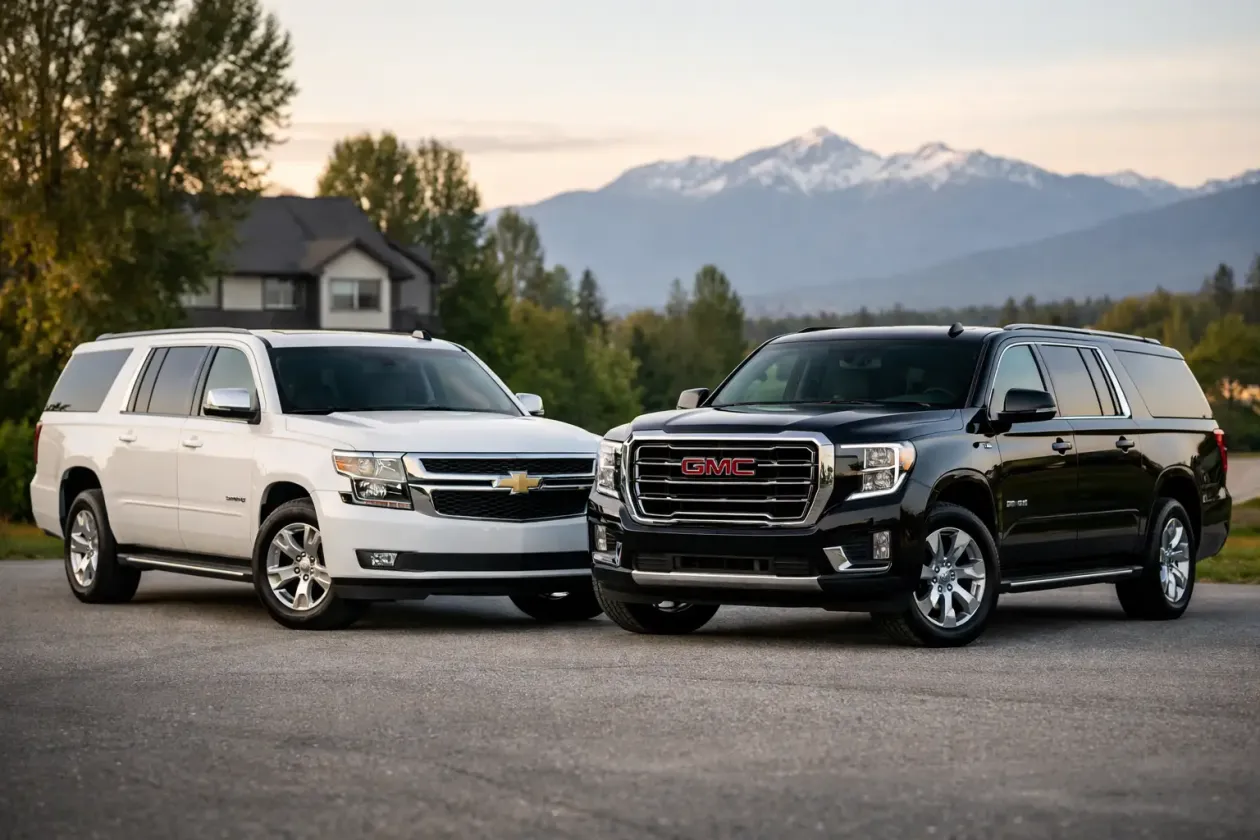
If you’re shopping suburban versus yukon xl, you’re not choosing between good and bad. You’re choosing between two full-size GM heavy hitters built on the same basic foundation, but aimed at slightly different buyers. That matters, because on paper they look nearly identical. In the real world, the details are what decide whether you end up with the right family hauler, tow rig, road-trip machine, or all-around truck-based SUV.
For truck guys, this matchup is interesting because it shows how GM splits one platform into two personalities. The Chevrolet Suburban has always been the household name. The GMC Yukon XL leans a little more upscale, a little more dressed up, and usually a little pricier. Same bones, different attitude.
Suburban versus Yukon XL at a glance
Mechanically, these SUVs are close enough to be considered siblings. Both ride on GM’s full-size SUV platform, both offer independent rear suspension on newer generations, and both can be configured with serious towing capability, big passenger room, and enough cargo space to swallow gear for a long weekend without breaking a sweat.
The biggest difference is not capability. It’s packaging.
The Suburban usually gives you a broader trim spread and a more workmanlike image, even when it gets nice. The Yukon XL tends to present itself as the more premium version, especially once you move into Denali territory. If you want the cleaner Chevy look, the Suburban makes sense. If you like GMC’s more upscale styling and features, the Yukon XL starts making a strong case fast.
Size, space, and everyday use
If your main reason for buying either one is room, you’re already in the right lane. Both offer real third-row usability, and that’s a huge deal. A lot of three-row SUVs claim seating for adults, then punish anybody over 5-foot-8. The Suburban and Yukon XL usually don’t play that game.
Cargo room is one of the biggest selling points. Behind the third row, both still give you useful space. Fold seats down and you get the kind of flat, long storage area that makes these things great for road trips, sports gear, camping, tools, or hauling swap meet finds. If you’ve spent time around short-wheelbase SUVs, the extra length here is the whole point.
That said, the same length that makes them useful can be annoying in daily life. Parking lots get tight. Older garages can be a problem. Urban driving is not their strong suit. If your life includes crowded parking decks and narrow streets every day, the full-size advantage can start to feel like overkill.
Powertrains and towing
This is where a lot of buyers expect a major split, but there really isn’t one. Depending on generation and trim, the Suburban and Yukon XL have shared much of the same engine lineup. That can include the 5.3L V8, the 6.2L V8, and in newer models, the Duramax diesel. Transmission pairings and towing hardware are also closely matched.
For most owners, the question is less about which nameplate to buy and more about which engine to choose.
The 5.3L is the volume option. It’s proven, familiar, and generally enough for family duty, highway cruising, and moderate towing. The 6.2L gives you stronger acceleration and better confidence when loaded up, but you’ll usually pay more to get it and feed it. The diesel is a smart pick for long-distance drivers and people who tow often, especially if range matters to you.
If towing is high on your list, trim and axle ratio matter more than badges. A properly equipped Suburban can tow extremely well, and so can a properly equipped Yukon XL. A badly optioned version of either one can leave you disappointed. Don’t buy the logo and assume the specs take care of themselves.
Interior feel and trim differences
Here’s where suburban versus yukon xl starts to separate a little more clearly.
The Suburban often feels like the more straightforward choice. Even higher trims still carry a Chevy identity that feels practical first, upscale second. That’s not a knock. For a lot of buyers, that balance is exactly right. You get the room, the features, and the capability without leaning too hard into luxury branding.
The Yukon XL, especially in Denali and Denali Ultimate form, pushes harder into premium territory. Different grille treatment, more chrome in many trims, upgraded materials, and a generally richer cabin vibe make it feel like GMC wants to move it upmarket. If you like a nicer interior and more visual presence, that extra polish can be worth it.
But there’s a trade-off. Once you get deep into Yukon XL premium trims, pricing can climb fast. At that point, you have to ask yourself if you’re paying for features you actually want or just a more upscale badge experience. Some buyers absolutely want that. Some would rather keep the money for tires, travel, a trailer, or the next project in the garage.
Styling and brand identity
This part is subjective, but it matters more than people admit.
The Suburban has a long reputation and a cleaner, more familiar image. It works as a fleet truck, family truck, road-trip truck, or blacked-out street build. It blends in when you want it to and looks sharp when spec’d right. There’s a reason the name has stayed strong for generations.
The Yukon XL usually looks more assertive. GMC tends to use bolder front-end styling and a slightly more premium design language. If you want something that feels a little less common and a little more dressed up, the Yukon XL has the edge.
Neither choice is wrong. This really comes down to whether you want classic Chevy utility or GMC’s more polished attitude.
Value, pricing, and used market reality
New for new, the Suburban often delivers better value. You can usually get into similar capability for less money, especially in lower and mid trims. That makes it the smart buy for people who care more about function than trim-level flex.
The Yukon XL tends to carry stronger premium pricing, and in some used markets it keeps that reputation too. Denali models, in particular, can stay expensive because buyers love the feature set and status. The upside is obvious if that’s what you want. The downside is equally obvious if you’re just trying to get maximum SUV for the dollar.
Used shopping adds another layer. Condition matters more than nameplate. Service history, suspension wear, transmission behavior, active fuel management concerns on certain engines, and electronics condition should all weigh heavier than whether the grille says Chevrolet or GMC. A clean, maintained Suburban is a better buy than a neglected Yukon XL every single time.
Which one fits your life better?
If you want the straight answer, the Suburban makes the most sense for more buyers. It gives you the full-size SUV formula with fewer pricing penalties, tons of trim options, and the same core capability that made these trucks staples for families, contractors, travelers, and tow-duty owners.
The Yukon XL makes more sense if you want that same platform with a little more style, more premium appeal, and stronger high-end trim identity. It’s the one you buy when you know you want the extra comfort and appearance upgrades and you’re fine paying for them.
There are also owner-specific cases where one pulls ahead. If you’re building out a family road-trip machine and want maximum function per dollar, Suburban is hard to beat. If you want a tow-capable family SUV that also feels upscale enough to replace a luxury crossover, Yukon XL is easier to justify.
If you’re shopping older generations, the equation gets even more interesting. Enthusiasts already know badge differences mattered less than drivetrain, maintenance, and rust. That still holds true. Built by truck guys, for truck guys, the smartest move is always to buy the better example, not just the prettier brochure.
The real answer for truck people
For enthusiasts, this isn’t just a spec-sheet comparison. It’s about how you plan to use the truck. Long highway runs, towing a car trailer, hauling the family and gear, or putting together a clean street-friendly full-size SUV all point to the same basic truth: these are both excellent platforms when you buy the right one.
The Suburban is the blue-collar legend that still makes a ton of sense. The Yukon XL is the nicer boots version of the same idea. One isn’t tougher just because it costs less, and one isn’t better just because it costs more.
Buy based on engine, trim, condition, and purpose. If you do that, you’ll end up with a full-size GM SUV that earns its keep every day and still feels right when you glance back at it in the parking lot. That’s usually the sign you picked the right one.
Talk trucks with other owners
Post your truck, your build, or the problem you are chasing and get real answers from full-size GM truck owners in the FSC forum.
Open the FSC Forum →