

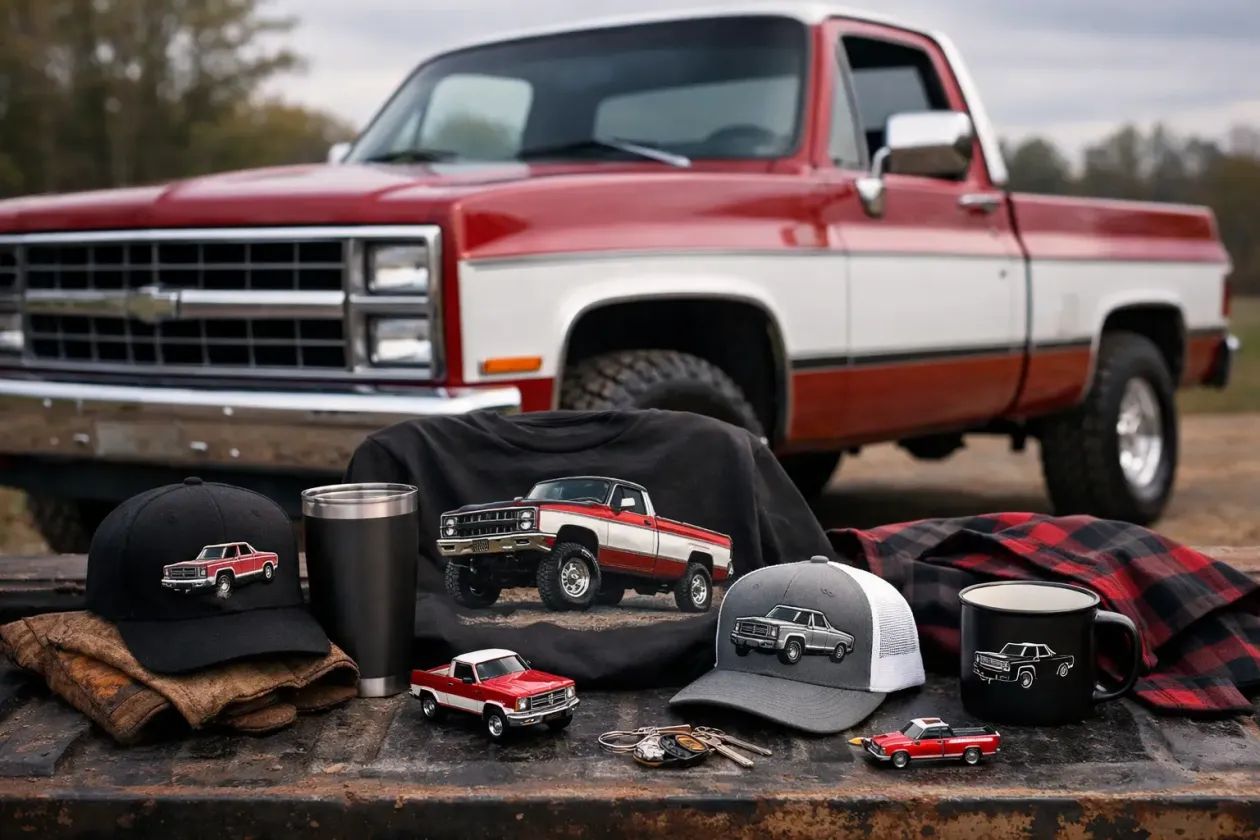
A faded squarebody on a shirt can look good from across the parking lot. But the best squarebody truck merch does more than fill space on cotton. It signals what you’re into, what era you respect, and whether you actually live this stuff or just like the aesthetic.
That difference matters in truck culture. Squarebodies are not a passing trend. They’re workhorses, project trucks, farm rigs, show builds, and family hand-me-downs that keep getting saved, rebuilt, and driven. So when somebody throws squarebody graphics on a tee, hat, or garage banner, enthusiasts notice pretty quickly whether it feels real or feels like generic vintage bait.
Why squarebody truck merch hits differently
A squarebody is easy to spot and hard to fake. The lines are blunt. The stance is honest. There’s no confusion about what decade it came from or what kind of owner it tends to attract. That gives squarebody truck merch an advantage over broader “classic truck” designs. It speaks to a specific crowd.
For a lot of owners, that crowd is the point. You’re not buying a shirt just because it has an old truck on it. You’re buying into the identity that comes with these rigs – carburetors, bench seats, two-tone paint, farm dust, shop nights, junkyard finds, and the constant hunt for one more good factory part. Merch works when it reflects that world with some respect.
There’s also a pride factor. Squarebody owners have spent years keeping these trucks visible. They’ve restored rusted-out cabs, swapped drivetrains, rebuilt interiors, and argued over trim, years, and factory options in the garage and at meets. Good merch becomes part of that same culture preservation. It says this platform still matters.
What separates good squarebody truck merch from throwaway stuff
The first test is simple – would an actual squarebody owner wear it? That sounds obvious, but a lot of merch misses the mark because it leans too hard into mass-market nostalgia. The truck is drawn wrong. The body lines are off. The stance looks cartoonish. The grille doesn’t match the year. To a regular customer, that might slide. To a truck guy, it kills the piece.
Good design starts with platform accuracy. If the art is based on a squarebody, it should look like a squarebody. That includes the proportions, trim cues, wheel fitment, and details that matter to people who know these trucks. It does not need to be technical blueprint art every time, but it should feel like it came from someone who has spent time around the real thing.
The second test is quality. Cheap prints and thin material can work for a one-time event shirt, but they usually don’t hold up in the shop, at a cruise-in, or after a few washes. Truck enthusiasts tend to wear their gear hard. It goes to races, swap meets, parts runs, and late-night wrench sessions. If the merch falls apart fast, it stops feeling like enthusiast gear and starts feeling like disposable promo stuff.
Then there’s the message. Some pieces work because they stay simple – a clean front-end graphic, a year range, a subtle nod to GM truck heritage. Other pieces go louder with patina themes, lowered builds, lifted 4x4s, crew cabs, duallys, or period-correct styling. Neither approach is wrong. It depends on who the merch is for. A guy with a stock survivor may not want the same look as someone building a slammed shop truck. The best brands know the difference.
The styles squarebody fans actually connect with
Graphic tees are still the backbone because they’re easy to wear and easy to get right. But the strongest squarebody truck merch usually stretches beyond one basic shirt. Hats, hoodies, shop banners, decals, and garage pieces often carry more staying power because they become part of daily life around the truck.
A hat with a clean squarebody silhouette can be more versatile than a loud tee. A heavyweight hoodie with a solid back graphic gets worn all fall and winter. A well-made banner can live in a garage for years. Decals are a different lane entirely – lower cost, easy to add to a toolbox or back glass, and usually more about signaling community than making a fashion statement.
That’s where context matters. Not every enthusiast wants merch that looks like streetwear, and not every enthusiast wants old-school dealership vibes either. Some want understated gear they can wear anywhere. Others want bold graphics that immediately tell the room what they’re about. Good merch lines usually offer both instead of forcing one look on everybody.
Why authenticity matters more than hype
Truck culture has a strong radar for fake enthusiasm. If merch feels disconnected from real ownership, real builds, or real community, people can tell. That doesn’t mean every shirt has to come from someone with a six-truck collection and a perfect paint booth. It means the brand behind it should understand what squarebodies mean to the people keeping them on the road.
That’s also why community-backed merch tends to hit harder. When the design language comes from actual build threads, show coverage, shop talk, and years of platform-specific obsession, the product carries more weight. It feels earned.
Built by truck guys, for truck guys is more than a slogan when it’s done right. It changes the details. The trucks look right. The references land. The copy doesn’t sound outsourced. Even the product mix makes more sense because it reflects how enthusiasts actually live – in the garage, on the road, at meets, and online with people who know the platform.
Squarebody truck merch as part of the culture
A lot of people think merch is just an extra. In this space, it’s more than that. It helps keep the culture alive.
Every generation of truck enthusiasm needs visible signals. Back in the day, that might have been a dealer jacket, a local club shirt, a speed shop decal, or a hat from a truck event. Now it can be platform-focused apparel and garage gear that helps owners recognize each other and back the communities they care about.
That matters because squarebody culture is still growing. Prices are up, builds are getting better, and younger owners are getting into these trucks for different reasons than the old guard did. Some want period-correct restorations. Some want LS swaps and modern suspension. Some just want a weekend cruiser with the right stance and a bench seat. Good merch makes room for all of that without watering down what a squarebody is.
There’s a business side to it too. If a community sells merch, that support often feeds back into the things enthusiasts actually use – content, build inspiration, forum discussions, giveaways, and the kind of platform-specific coverage that keeps people engaged. When the brand is credible, buying the merch can feel less like buying a shirt and more like backing the scene.
What to look for before you buy
If you’re thinking about picking up squarebody truck merch, start with the same mindset you’d use when buying parts or following tech advice. Ask whether the source knows the platform and respects the audience.
Look at the details in the design. If the truck art is sloppy, that tells you a lot. Check the product range too. If everything feels random, trend-chasing, or disconnected from full-size GM truck culture, that usually shows. On the other hand, if the merch feels like it came from people who spend time around squarebodies, GMT400s, OBS trucks, and the whole full-size Chevy scene, that’s a stronger sign.
It’s also worth thinking about how you’ll actually use it. A shirt is easy. A hoodie gets more wear. A banner or decal might say more about your space and your truck than a drawer full of tees ever will. There’s no single right choice. It depends on whether you want everyday wear, garage presence, or something tied to events and giveaways.
And yes, fit and print quality still matter. Even the best design loses steam if the shirt fits weird or the ink cracks after two washes. Culture gets somebody to buy once. Quality gets them to keep wearing it.
Wear what reflects the truck life
Squarebody truck merch is at its best when it feels like an extension of the trucks themselves – honest, recognizable, and built with some backbone. It should make sense to the guy who drives a primered project, the guy restoring a factory-spec survivor, and the guy who still turns around to look at his truck after parking it.
If it looks right, feels right, and comes from a real enthusiast space, it does more than sell a design. It gives people a flag to rally around. And for a platform with this much history still rolling down American roads, that’s worth wearing.
Like this kind of no-BS truck content?
Grab FullSizeChevy gear built for Squarebody, OBS/GMT400, GMT800, and GMT900 owners — made by people who actually turn wrenches.
Talk Squarebody with other owners
Post your truck, your build, or the problem you are chasing. Real Squarebody owners in the FSC forum will tell you what actually worked on theirs.
Squarebody Gear
Shop all Squarebody gear →
Find every repair, buying, maintenance, and troubleshooting guide in the Squarebody Owner’s Hub.

