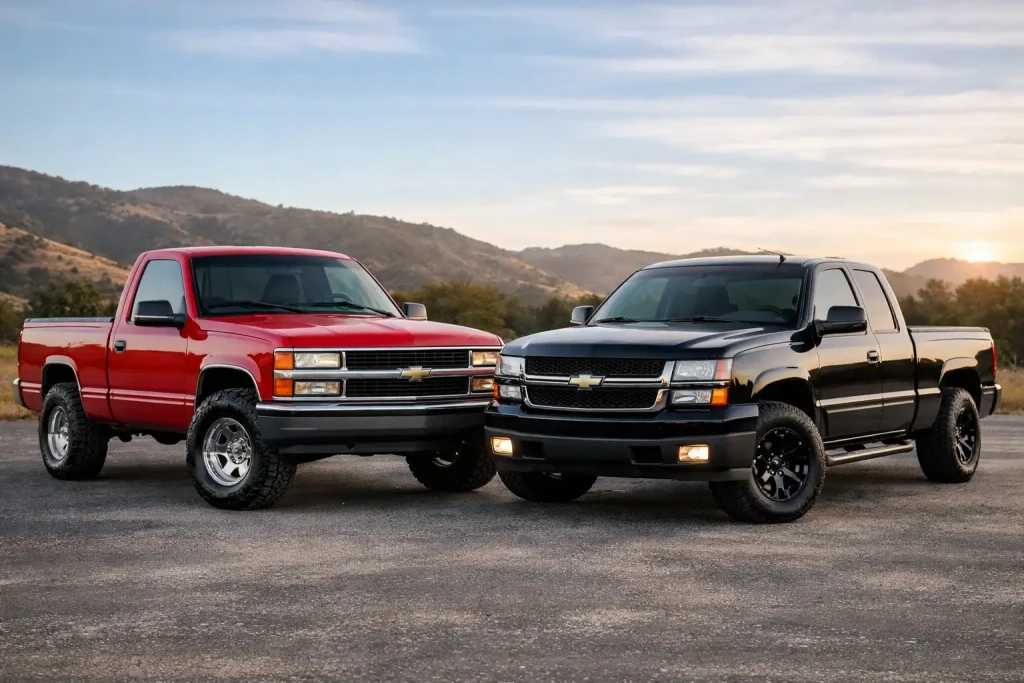
You can spot this debate from a mile away at any truck meet. One guy is leaning on a clean GMT400 with classic lines and just enough patina to prove it still gets used. Another is standing next to an NBS Silverado, talking about better power, easier parts sourcing, and how he actually wants to road-trip the thing. The gmt400 vs nbs silverado question matters because these trucks sit in that sweet spot where old-school GM character meets real-world usability, but they deliver that mix in very different ways.
GMT400 vs NBS Silverado at a glance
If your heart pulls toward simple styling, analog feel, and the kind of truck that still looks right with a toolbox in the bed, the GMT400 has a strong case. It covers the 1988-1998 Chevy and GMC C/K line, plus the 1999-2000 heavy-duty carryover trucks, and it has become a favorite for builders who want a platform with personality.
The NBS Silverado, usually meaning the 1999-2007 classic half-ton generation, moves the game forward. It feels newer because it is newer. You get improved chassis refinement, better engine options out of the box, and a truck that can be easier to live with if you plan to commute, tow on weekends, and stack miles without feeling like you are constantly managing an old vehicle.
Neither one wins across the board. This choice comes down to how you want your truck to feel, how much wrenching you enjoy, and whether your priorities lean more toward style, simplicity, or daily-driver comfort.
The biggest difference is character
The GMT400 has a more old-school soul. The hood feels longer. The seating position feels more truck-like. The sheet metal has that square-meets-rounded GM look that defined the 1990s, and a clean OBS-era Chevy still turns heads because it looks honest. These trucks have a mechanical, connected feel that a lot of enthusiasts chase on purpose.
The NBS Silverado is less nostalgic and more polished. GM cleaned up the ride, improved cabin ergonomics, and made the whole package easier to drive fast, far, and often. Even a stock NBS feels more modern in the way it tracks down the highway, absorbs rough pavement, and handles daily use. If the GMT400 is about vibe, the NBS is about function with enough style to keep it interesting.
That is why this debate gets heated. A GMT400 often wins on emotion. An NBS often wins on logic. Truck guys know both matter.
Styling and interior feel
For many owners, the GMT400 wins before the key ever turns. The body lines are cleaner and more distinct. Regular cab short beds, sport trucks, stepsides, and two-tone builds all look right on this platform. Lower one on the right wheel and tire setup and it has instant presence. Keep one stock height with a good stance and it still works.
Inside, though, the age shows. The GMT400 interior is simple and familiar, but materials wear, dash parts crack, and ergonomics are very much from another era. Some owners love that because it feels raw and uncomplicated. Others get tired of chasing squeaks, brittle trim, and old electrical issues.
The NBS interior is not perfect, and anyone who has owned one knows the dash and seat wear can become their own headache, but it generally feels more modern and livable. Controls are easier, the cabin is quieter, and the seats usually make more sense for long drives. If you spend real time behind the wheel, the NBS starts gaining ground fast.
Engines, transmissions, and drivability
This is where the NBS Silverado usually pulls ahead for the average owner. The LS-based engines changed the game. A 4.8, 5.3, or 6.0 offers solid reliability, strong aftermarket support, and easy power. Even bone stock, these trucks feel more responsive and more efficient than most GMT400 setups.
GMT400 trucks came with several engine choices over the years, including the 4.3 V6, small-block 5.0 and 5.7 V8s, the 7.4 big block in heavier applications, and the legendary 6.5 diesel. The 350 TBI and later Vortec 5.7 have loyal followings for good reason. They are simple, durable, and sound right in a classic Chevy truck. But stock for stock, they do not match the LS trucks for easy horsepower or modern drivability.
Transmissions tell a similar story. A well-sorted GMT400 can be perfectly dependable, but age is age. The NBS benefits from newer powertrain tech and usually feels tighter, shifts cleaner, and responds better to tuning and upgrades. If you want to get in, hit the highway, and not think twice, the NBS has the edge.
Ride quality, towing, and daily use
The GMT400 rides better than many older trucks, which is one reason the platform still has such a loyal fan base. GM got a lot right with suspension geometry and overall comfort for the time. But the NBS refined the formula. Steering feel, braking confidence, and highway manners all improved enough that you notice it immediately when driving them back to back.
For towing and hauling, either platform can do the job when set up correctly. A heavy-duty GMT400 still earns respect because it was built for work and does not pretend to be anything else. But if you are comparing half-ton to half-ton for modern mixed use, the NBS is easier to recommend. Better engine choices, improved chassis feel, and generally stronger everyday manners make it a better all-around truck for many owners.
That matters if your truck has to do more than look good on Saturday night. If you are towing a car trailer, hauling parts, or putting your family in it for a weekend trip, the NBS feels less like a project and more like a partner.
Mods, aftermarket support, and build potential
Both platforms have huge aftermarket appeal, but they scratch different itches.
A GMT400 is perfect for the guy who loves period-correct style, old-school custom touches, and straightforward wrenching. Suspension drops, cowl hoods, billet grilles, smooth bumpers, and clean paint all fit the platform naturally. These trucks also take well to engine swaps, including LS conversions, if you want the best of both worlds.
The NBS is arguably the easier platform if your goal is performance per dollar. Cam kits, intake upgrades, tuning, headers, suspension parts, and brake improvements are everywhere. You can build a quick street truck, a reliable tow pig, or a clean lowered cruiser without fighting the platform. The support is deep because so many of these trucks were produced and so many are still on the road.
If you want a truck that can become whatever you imagine with fewer compromises, the NBS has a strong advantage. If you want a truck with stronger identity before the first mod goes on, the GMT400 still hits harder.
Ownership costs and common headaches
This part is less romantic, but it matters.
A GMT400 may be cheaper to buy in rough shape, but making one truly solid can get expensive fast. Interior restoration, worn suspension, old seals, weatherstripping, paint issues, and deferred maintenance add up. Many of these trucks have already lived several lives. You are often buying history along with sheet metal.
The NBS Silverado is newer, but not new enough to avoid age-related problems. Gauge clusters, instrument panels, window regulators, front-end wear, rust in the usual places, and electronic gremlins are all part of the ownership conversation. Still, for many buyers, the NBS offers a better balance of purchase price, parts availability, and ease of keeping it on the road.
Insurance, fuel economy, and maintenance all depend on configuration, but in general, an NBS half-ton with a 5.3 tends to be a friendlier everyday ownership experience than an older GMT400 with unknown history.
So which one should you buy?
If you want the truck that feels cooler, simpler, and more tied to a certain era of GM culture, buy the GMT400. It is the one you park, look back at, and keep finding excuses to improve. It rewards owners who enjoy hands-on maintenance and appreciate a truck with personality baked in.
If you want the truck that makes more sense as a regular driver, easier performance build, or all-around do-it-all pickup, buy the NBS Silverado. It is more refined, easier to make fast, and generally better suited to the owner who wants strong capability without constant old-truck compromises.
There is also a third answer truck guys know well. Buy the one with the cleaner body, better maintenance history, and fewer hacked-up repairs. A great version of either platform will beat a neglected example of the other every single time.
That is really the heart of the gmt400 vs nbs silverado debate. One truck wins with feel. The other wins with function. Both keep the culture alive when they are owned by people who actually use them, wrench on them, and care enough to keep them around. If you are still stuck, stop reading specs for a minute and think about the truck you will want to walk out to on a cold morning, a summer cruise night, or a long highway pull with parts in the bed. That answer is usually the right one.