

Published April 19, 2026 · Updated April 27, 2026 · How we source this
9 Chevy Truck Build Ideas That Actually Work
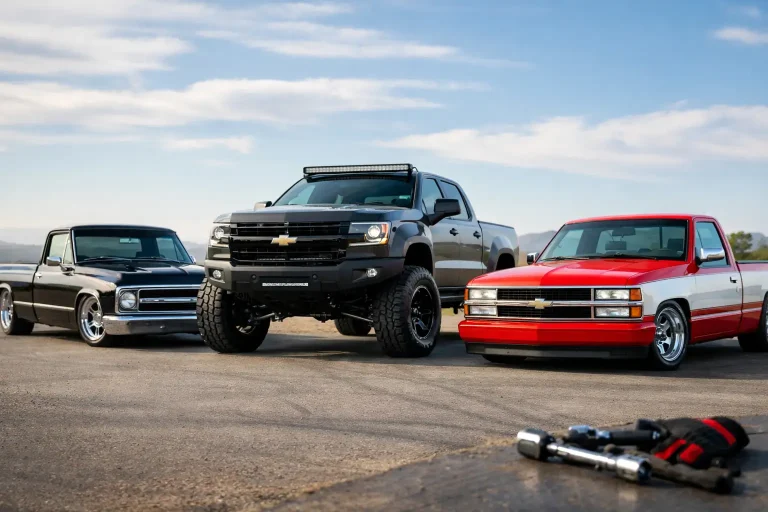
Some trucks look cool for a month. The good ones still make sense two years later, after the first parts order, the second round of changes, and a few hard lessons. That is why the best chevy truck build ideas start with honesty. Not what looks good on a reel, but what fits your platform, your budget, and how you actually use the truck.
If you are working with a Squarebody, GMT400, OBS, NBS, or newer full-size Chevy, the smart move is to build around a clear purpose. A street truck needs different parts than a hunting rig. A tow build should not be chasing the same setup as a slammed short bed. Build direction matters, because random mods get expensive fast.
Chevy truck build ideas start with the truck’s job
Before you buy wheels, lighting, or suspension parts, decide what the truck is supposed to do well. That sounds basic, but it saves money and keeps the build from turning into a pile of mismatched parts. A truck that sees highway miles, weekend cruises, and the occasional show needs balance. A work truck or tow rig needs reliability first. A trail truck can give up some road manners if the payoff off-road is worth it.
The other thing to be real about is the platform itself. A clean GMT400 regular cab short bed wants a different path than a high-mileage Silverado crew cab 4×4. Some trucks are better candidates for restoration-style builds. Some are ideal for budget performance. Some should stay simple because the value is in preserving what they already are.
1. The clean street truck build
This is one of the safest chevy truck build ideas because it works on almost every generation. The goal is simple – clean stance, good wheel fitment, sharp paint or patina, and enough refinement to make the truck feel finished.
For a street build, suspension is where the look gets made or ruined. A mild drop usually ages better than going too low. On Squarebodies and GMT400s, a tasteful drop with quality shocks, corrected geometry, and wheels that actually fit the truck will always beat a slammed setup that rides terrible and chews tires. Keep the brakes in the conversation too. If the truck looks faster than it stops, the build is not done.
Inside, this style rewards restraint. Fresh seat covers, a solid steering wheel, clean gauges, sound deadening, and a good head unit can make an older Chevy feel far more expensive than it is. You do not need to turn it into a modern luxury truck. You just need it to feel tight, clean, and intentional.
2. The period-correct restoration build
Some trucks do not need a reinvention. They need respect. If you have a survivor-grade Squarebody, an early Silverado trim truck, or a clean OBS with original character, a period-correct build can be the smartest move.
This route is less about chasing trends and more about protecting what made the truck cool in the first place. Factory color combinations, correct trim, era-right wheels, stock ride height or a subtle drop, and an engine bay that still looks like a truck engine bay all go a long way. The trade-off is that this kind of build takes patience. Tracking down correct parts can be slower and more expensive than buying aftermarket replacements.
Still, when it is done right, this style gets respect from people who know these trucks. It also tends to age better than trend-heavy builds that feel outdated by next season.
3. The tow and workhorse setup
Not every build needs to be a showpiece. Some of the best trucks in the full-size world are the ones that start every time, pull hard, and handle real work without drama. If your Chevy spends time with a trailer behind it, build for function first.
That means cooling, brakes, steering, and transmission health matter more than cosmetic parts. Upgraded trans cooling, fresh bushings, quality brake components, load-supporting suspension, and the right tire for towing will do more for the truck than flashy accessories ever will. Gearing matters here too. The wrong gear and tire combination can make a truck feel lazy, especially with older small-block or big-block setups.
This style also rewards sensible interior upgrades. Better towing mirrors, auxiliary gauges, a brake controller setup that looks clean, and proper lighting make the truck more usable. It may not get the same attention as a polished show build, but a dependable tow rig earns respect the old-fashioned way.
4. The budget daily driver refresh
A lot of owners are not trying to build a magazine truck. They want something dependable, sharp, and fun enough to keep. That is where a budget refresh wins.
This is one of the most realistic chevy truck build ideas because it focuses on the highest-return upgrades. Fix the deferred maintenance first. Then improve the stuff you touch and feel every day. Replace worn front-end parts, tighten up the steering, install quality shocks, refresh the seat, correct annoying electrical issues, and clean up the paint as much as the budget allows.
After that, pick one visual direction and stick to it. Maybe that means factory-style wheels with better tires. Maybe it means a mild level and a clean set of 17s or 18s. The point is not to do everything. The point is to make the truck feel sorted.
5. The off-road and hunting rig
A full-size Chevy built for dirt roads, trails, hunting land, or backcountry camp duty has to strike a balance. Too much lift and too much tire can make the truck a chore to live with. Too little protection and one bad weekend can wreck the front end, rocker panels, or driveline angles.
A smart off-road build starts with realistic terrain. Mud truck, desert runner, and forest trail rig are not the same thing. For most owners, moderate lift, quality all-terrain tires, recovery points, skid protection where needed, and dependable lighting will cover far more ground than a giant suspension setup. Lockers, gearing, and traction aids usually matter more than bragging rights parts.
If the truck still sees road miles, keep noise and fuel economy in mind. Big aggressive tires look right, but they can get old on long highway runs. It depends on how much pavement you are willing to sacrifice.
6. The V8 performance build
There is still nothing wrong with building a truck that feels rowdy. A strong small-block, healthy cam, headers, intake, tune, and a transmission that can hold the power can wake up almost any full-size Chevy. On lighter regular cab trucks, even moderate power feels serious.
The mistake is building only for dyno talk. If the truck surges, overheats, or becomes miserable in traffic, the fun fades fast. Streetable power is usually the better target. Good cooling, fuel delivery, traction, and rear gearing matter just as much as the engine combo. So does honesty about budget. Horsepower gets expensive once you move past the basic bolt-on stage.
For older platforms, this is also where chassis upgrades pay off. More power without better brakes and suspension is a shortcut to a truck that feels unfinished.
7. The modernized classic
This build style has become popular for good reason. It keeps the lines and personality of an older Chevy while upgrading the parts that make it easier to drive now. Think classic body, but with fuel injection, overdrive, improved air conditioning, better audio, stronger brakes, and cleaner wiring.
This path is especially good for owners who love old trucks but actually want to use them. A Squarebody or OBS that starts easily, idles clean, cruises comfortably, and has decent stopping power gets driven more. That matters. Trucks are better when they live on the road, not under a cover.
The challenge is keeping the truck from losing its identity. Too much modern hardware can make an older build feel generic. The best ones still look and feel like the platform they came from.
8. The show-ready detail build
Some trucks are not about extreme fabrication. They are about execution. Straight body lines, deep paint, cleaned-up trim, a detailed undercarriage, polished hardware, and an interior that looks complete. This style is less about one big mod and more about getting 50 small things right.
That is harder than it sounds. Detail builds expose sloppy work fast. Bad panel gaps, cheap plastic accessories, mismatched finishes, and messy wiring stand out on a truck that is supposed to be clean. If you go this route, slow down and finish what you start.
The upside is that this build style works whether the truck is stock-height, lowered, or mildly lifted. Clean always plays.
9. The community-driven build plan
Sometimes the best build is the one that grows the right way instead of all at once. Start with maintenance. Add wheels and stance. Fix the interior. Improve the drivetrain when the budget is there. Learn from guys who have already built your platform and know what parts work together.
That kind of approach usually beats impulse buying. It also helps you avoid common mistakes like overbuilding the suspension, buying the wrong wheel offset, or mixing parts that fight each other. Built by truck guys, for truck guys, that kind of shared knowledge is what keeps the culture alive and keeps projects moving.
How to choose between these chevy truck build ideas
Pick the build that matches the truck you have, not the truck you wish you had. A rough but solid 4×4 can become an excellent trail or hunting rig. A clean two-wheel-drive sport truck may deserve a street setup. A rare trim package or survivor truck might be better preserved than reinvented.
Then look at your budget in phases. There is nothing wrong with a three-stage plan. In fact, that is usually smarter. Stage one gets the truck reliable. Stage two handles stance, wheels, and comfort. Stage three goes after power, paint, or deeper upgrades. That approach keeps the truck usable while the build evolves.
It also pays to think about parts support and downtime. Some builds look great on paper but turn into months of chasing little problems. If you need the truck every week, reliability has to carry more weight than ambition.
A good Chevy build does not have to be the loudest, lowest, tallest, or most expensive one in the lot. It just has to make sense every time you walk up to it, fire it up, and take it out. Build it for the way you drive, keep your standards high, and let the truck earn its look.
Talk trucks with other owners
Post your truck, your build, or the problem you are chasing and get real answers from full-size GM truck owners in the FSC forum.
Open the FSC Forum →