

Published June 12, 2026 · Updated July 15, 2026 · How we source this
GMC Yukon vs Chevy Tahoe: Which Fits You?
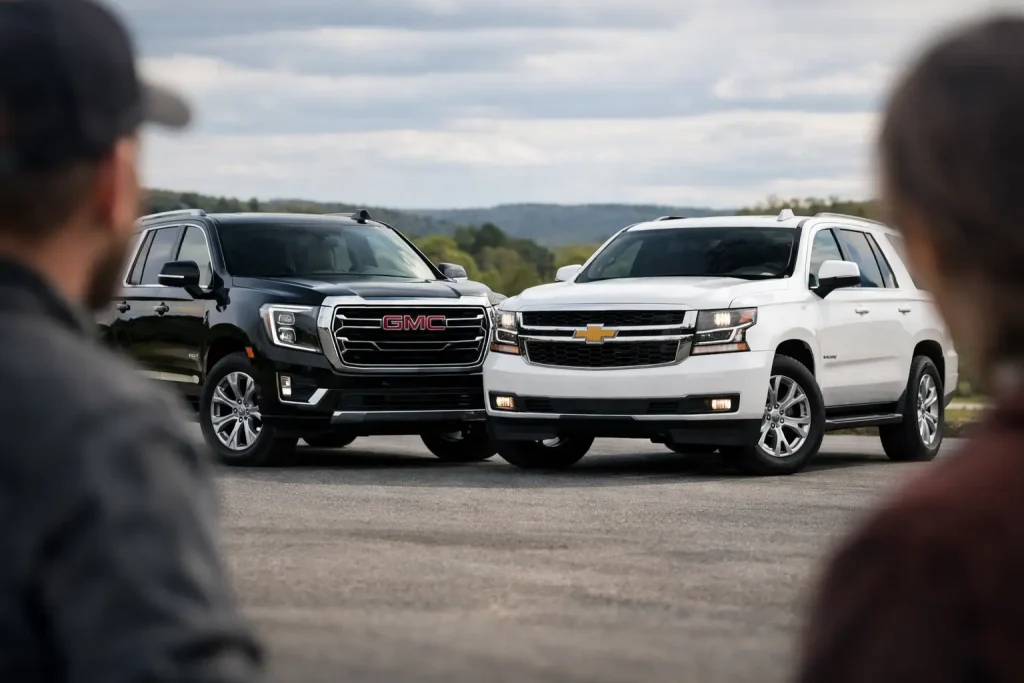
You can park a Yukon next to a Tahoe and tell yourself they are basically the same truck. Then you live with both, tow with both, load family into both, and start noticing where the real differences show up. That is why the gmc yukon vs chevy tahoe debate never really goes away in the full-size GM world – these SUVs share a lot of hardware, but they do not hit the same buyer the same way.
For truck guys, this choice is less about badges and more about personality, trim strategy, and how you actually use the platform. One leans a little more upscale right out of the gate. The other usually gives you a little more room to play the value game. Same bloodline, different attitude.
GMC Yukon vs Chevy Tahoe at a glance
Underneath, the Yukon and Tahoe are close relatives. They ride on the same full-size GM SUV architecture, offer similar powertrains, and deliver the same basic mission: haul people, gear, trailers, and road-trip miles without feeling like a crossover trying to act tough.
That said, GMC and Chevrolet tune the experience differently. Yukon usually presents itself as the more premium choice, especially once you get into Denali and Denali Ultimate territory. Tahoe has broader mainstream appeal, with trims that can start more practical and stay more budget-conscious while still giving you a lot of SUV for the money.
If you are cross-shopping these two, the real question is not which one is better on paper. It is which one makes more sense for your priorities.
Trims, engines, and price (2025)
| Chevy Tahoe | GMC Yukon | |
|---|---|---|
| Trims | LS, LT, RST, Z71, Premier, High Country | Elevation, AT4, AT4 Ultimate, Denali, Denali Ultimate |
| Starting MSRP | ~$59,000 (LS) | ~$67,900 (Elevation) |
| Top trim MSRP | ~$78,700 (High Country) | ~$102,500 (Denali Ultimate) |
| Shared engines | 5.3L V8 (355 hp / 383 lb-ft) · 6.2L V8 (420 hp / 460 lb-ft) · 3.0L Duramax diesel (305 hp / 495 lb-ft) | |
| Max towing | Up to 8,400 lb properly equipped — identical | |
| Center screen | 17.7″ horizontal | 16.8″ vertical |
The Tahoe starts about $9,000 cheaper and offers six trims (including the off-road Z71); the Yukon starts higher and climbs into genuine luxury with the Denali and Denali Ultimate. Mechanically they are identical — same platform, same engines, same 8,400-lb tow rating. Verify current-year pricing and trim availability before buying; figures per U.S. News and J.D. Power, 2025 model year.
Styling and road presence
This is where the split starts getting obvious. The Tahoe has always carried a cleaner, more straightforward Chevrolet look. Depending on trim, it can feel work-ready, family-ready, or sportier without trying too hard. RST models especially give it a strong street-truck vibe that a lot of enthusiasts appreciate.
The Yukon usually comes in with a little more polish. The grille treatment, lighting, and trim packaging tend to look more upscale, even when the mechanical foundation is nearly identical. Denali models make that point fast. If you want your full-size SUV to feel one click closer to luxury without jumping all the way to Cadillac money, the Yukon makes a strong case.
Neither one is wrong here. It comes down to whether you want clean Chevy familiarity or a GMC presentation with a little extra swagger.
Interior feel and trim strategy
Inside, the difference often comes down to where you start and where you plan to stop. A lower or mid-level Tahoe can be the smarter buy if you want the space and capability without paying for every premium touch. Chevrolet gives buyers a wider sense of range, from basic family hauler to nicely equipped daily driver.
Yukon trims tend to push upscale a bit sooner. Materials, seat design, dash presentation, and trim details often feel a touch richer when similarly equipped. On the top end, Denali and Denali Ultimate push hard into near-luxury territory, which is exactly why some buyers go GMC in the first place.
That does not mean Tahoe interiors are second-rate. Recent generations stepped up in a big way with better layouts, improved screens, and much stronger overall fit and finish. But if interior atmosphere is a major part of your buying decision, Yukon usually has the edge.
Space, comfort, and family duty
In everyday use, both are excellent at the full-size SUV job. They offer roomy seating, real cargo capacity, and enough comfort to make long highway runs easy. If you are moving kids, dogs, coolers, baseball gear, or road-trip luggage, either one handles it without drama.
The extended versions matter too. Yukon XL and Tahoe Suburban-class thinking appeal to buyers who need serious cargo space behind the third row. For some families, that extra length is the difference between relaxed travel and packing frustration.
Ride quality is strong in both, especially when equipped with higher-end suspension setups. Magnetic ride control and air suspension, where available, can smooth out rough pavement and make these big SUVs feel surprisingly composed. The trade-off is simple: more features can mean more expense down the road if you keep one for the long haul.
Engines, towing, and how they feel on the road
For most buyers, the powertrain menu will not decide the Yukon vs Tahoe debate because both usually offer the same core engines. Depending on model year and trim, that can include the 5.3L V8, the 6.2L V8, and the Duramax diesel.
The 5.3L is the familiar all-arounder. It is proven, capable, and plenty adequate for daily driving and moderate towing. The 6.2L is the enthusiast pick if you want stronger acceleration and a more effortless feel when the SUV is loaded down. The diesel has its own loyal following for range and torque, especially for highway-heavy owners.
Towing numbers are generally close when comparably equipped. What matters more is axle ratio, drivetrain configuration, wheel setup, and whether the specific SUV has the factory towing package you actually need. Badge loyalty does not change physics. A poorly equipped Yukon will not out-tow a properly spec’d Tahoe just because it wears GMC on the grille.
On the road, both feel like big, body-on-frame GM SUVs should. They are stable, confident, and easy to drive for their size. The newest generations got better steering feel, better ride control, and a more refined overall personality. If you are coming from an older GMT800 or GMT900 truck, the jump in refinement is obvious.
Price and value
This is where Tahoe often punches hardest. In many cases, a Tahoe gives you access to the same platform, same powertrains, and very similar capability at a lower entry price. That matters if you would rather spend less up front, or if you want to put your money into the exact options you care about instead of paying for a more premium brand position.
Yukon usually asks for more, and some of that premium is real. Better trim presentation, stronger high-end branding, and a more upscale image all carry value for the right buyer. But if you are the type who compares feature sheets dollar for dollar, Tahoe often looks like the sharper deal.
Used-market shopping makes this even more interesting. Depending on generation, Yukons can hold stronger pricing in certain trims, especially Denali. Tahoe inventory is often broader, which can give buyers more flexibility. If you are hunting for a clean used full-size GM SUV, patience matters more than the badge. Condition, maintenance history, rust, drivetrain choice, and trim level should drive the decision before brand loyalty does.
Which one makes more sense for enthusiasts?
For enthusiasts, this is not just a family-hauler question. It is also about what platform vibe you want in the driveway. Tahoe tends to fit buyers who like a simpler, more classic Chevrolet identity and maybe want a little more freedom to mod, personalize, or keep things functional without worrying about preserving a luxury image.
Yukon fits the guy who wants that same GM truck DNA with a more upscale edge. It is still a full-size body-on-frame SUV at heart, but it arrives with more built-in attitude around appearance and cabin feel. If that matters to you every time you grab the keys, then the higher price can make sense.
There is also the trim culture side of it. Tahoe RST, Z71, and well-optioned LT or High Country models all hit different lanes. Yukon AT4 and Denali trims do the same from the GMC side. The best choice depends on whether you want street look, off-road flavor, or premium comfort.
The real decision in gmc yukon vs chevy tahoe
If you strip away marketing and badge bias, the real gmc yukon vs chevy tahoe decision is pretty simple. Buy the Tahoe if you want the strongest value, wider trim flexibility, and a clean Chevy version of the full-size GM SUV formula. Buy the Yukon if you want a more premium look and feel without stepping up to Escalade territory.
Neither one is automatically the smarter move. A loaded Tahoe can price itself into Yukon territory fast. A lower-trim Yukon can make less sense if it does not actually give you the features that justify the GMC premium. It depends on how you spec it, how long you plan to keep it, and what matters most every day.
If you are shopping older generations, the same logic still applies. Tahoe often wins the practical argument. Yukon often wins the image and trim argument. The sweet spot is finding the cleanest example with the engine, options, and maintenance history you trust.
Built by truck guys, for truck guys, this is the kind of choice that is worth getting right the first time. Pick the one that matches your use, not just your impulse, and you will enjoy it a whole lot longer.
Talk trucks with other owners
Post your truck, your build, or the problem you are chasing and get real answers from full-size GM truck owners in the FSC forum.
Open the FSC Forum →